Quick Answer
Aeroponic cloners produce adventitious roots on stem cuttings in 5–14 days by suspending cut stems in a humid chamber and misting them with plain water or dilute rooting solution at 72–77°F — the fastest and highest-success-rate propagation method available to controlled-environment growers. --- Why Is Aeroponics the Ideal Method for Cloning Plants? Rooting a cutting requires balancing two contradictory demands:…
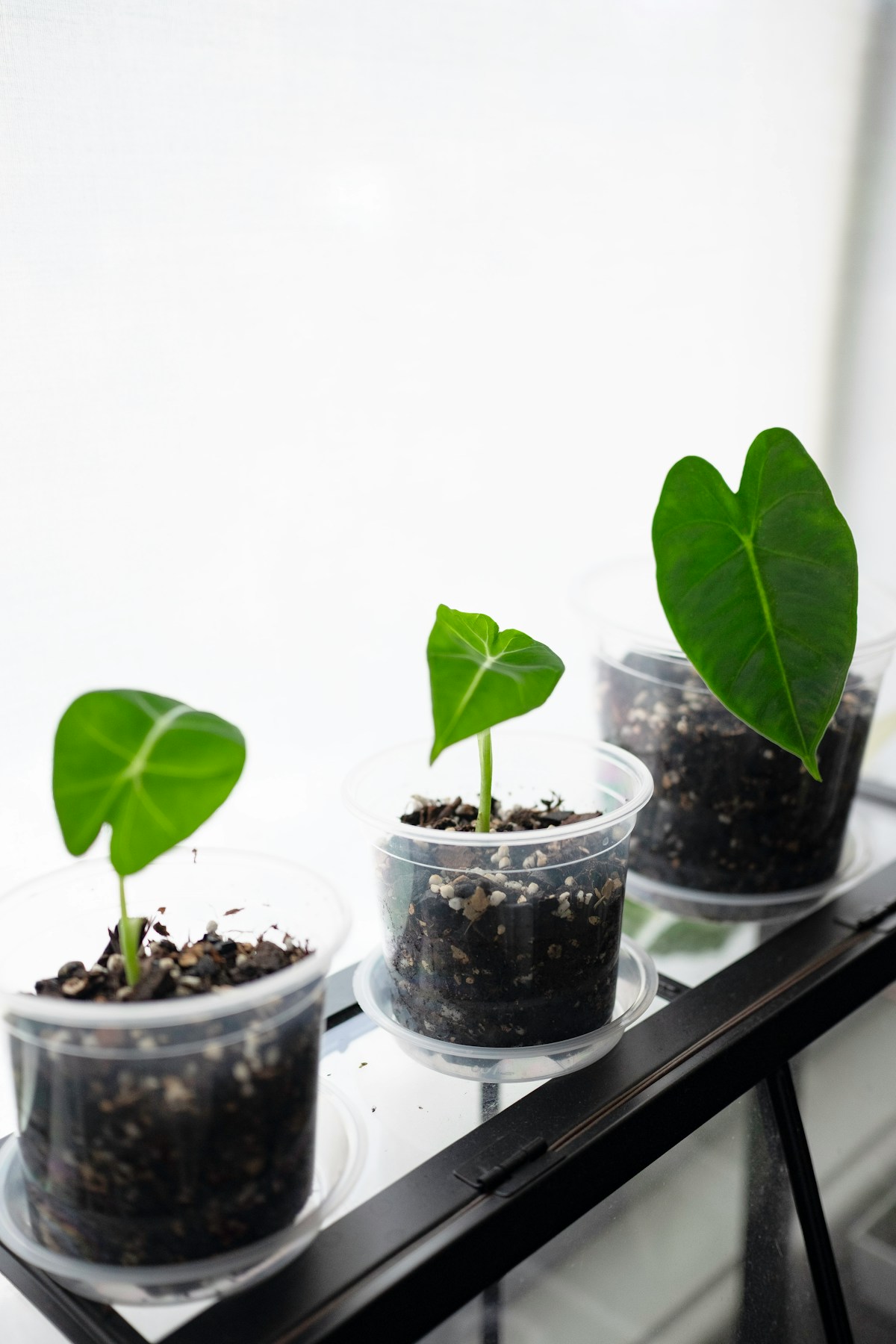
Aeroponic cloners produce adventitious roots on stem cuttings in 5–14 days by suspending cut stems in a humid chamber and misting them with plain water or dilute rooting solution at 72–77°F — the fastest and highest-success-rate propagation method available to controlled-environment growers.
Why Is Aeroponics the Ideal Method for Cloning Plants?
Rooting a cutting requires balancing two contradictory demands: the stem must stay hydrated while its cut base must receive abundant oxygen to trigger callus formation and root primordia development. Most traditional propagation methods compromise on one or both.
Rockwool cubes and peat pellets hydrate the cutting adequately but provide limited oxygen exchange at the stem base. Soil propagation adds beneficial microbiome activity but introduces pathogen pressure that can collapse an entire tray of cuttings. Water propagation supplies unlimited hydration but virtually no oxygen at the cut surface.
Aeroponic cloners solve both requirements simultaneously. The cut stem hangs in open air inside a sealed, humid chamber. A pump-driven manifold mists the exposed stems and stem bases every 3–5 minutes with a fine water spray, maintaining stem hydration via foliar absorption while the cut base — bathed in atomised water and warm, humid air — receives continuous oxygen between mist cycles. The result is a root induction environment that has no analogue in any other propagation method.
Comparative rooting performance:
| Propagation Method | Typical Root Emergence | Success Rate | Setup Cost |
|---|---|---|---|
| Aeroponic cloner | 5–14 days | 85–98% | $40–$200 |
| Rockwool in dome | 10–21 days | 65–85% | $10–$30 |
| Peat pellets | 14–28 days | 60–80% | $5–$15 |
| Plain water | 14–30 days | 50–75% | <$5 |
| Soil/perlite | 18–35 days | 55–75% | $5–$20 |
The aeroponic cloner's performance advantage is most pronounced for difficult-to-root species (woody herbs, some fruiting plants) and for commercial operations where rooting speed directly affects production throughput.
What Environmental Conditions Does Aeroponic Cloning Require?
Aeroponic cloning is sensitive to environmental parameters in ways that soil or rockwool propagation is not. Because the cutting has no roots and cannot yet actively uptake water, all hydration depends on foliar absorption and humidity maintenance. Deviating from optimal conditions by even a small margin can shift success rates dramatically.
Temperature
Solution temperature: 68–72°F (20–22°C). Below 65°F, root primordia development slows significantly. Above 75°F, dissolved oxygen in the mist water drops and pathogen (particularly Pythium) pressure rises. Use an aquarium heater if ambient temperatures fall below 65°F.
Air temperature in chamber: 72–77°F (22–25°C). Stem cells at the cut base are most mitotically active in this range, accelerating callus formation and root emergence.
Temperature differential warning: A chamber air temperature more than 5°F above solution temperature creates condensation patterns that pool liquid on stem bases rather than forming a thin film. This pooling is the primary driver of stem rot in aeroponic cloning.
Humidity
Maintain 80–95% relative humidity inside the cloner chamber. For most commercial cloner designs, the sealed lid creates adequate humidity passively once the pump is running. For DIY builds, add a simple hygrometer inside the chamber and monitor for the first 24 hours.
If humidity drops below 75% (common with poorly sealed lids or in very dry environments), cuttings will begin to wilt before roots emerge. Misting the lid interior manually once or twice per day resolves this in most cases.
Light
Keep the cloner in low-light conditions — 100–200 µmol/m²/s PPFD for 18 hours per day is sufficient. High light intensity drives transpiration faster than the cutting can compensate for without roots. The common mistake of placing a cloner under the same powerful grow lights used for vegetative plants causes cuttings to desiccate even in a humid chamber.
What Are the Cycle Times and Misting Intervals?
Misting Cycles
The standard aeroponic cloner cycle is 1–3 minutes on, 3–5 minutes off. The misting-on period keeps stem surfaces hydrated; the off period allows the cut base to access atmospheric oxygen, which is the signal that triggers root primordia formation.
If the cut base is continuously wet (pump running 100% of the time), oxygen access is restricted and root development slows to near zero — the cutting survives but does not root well. This is the most common beginner error in aeroponic cloning.
As cuttings develop visible root nubs (days 5–8), the misting cycle can be extended slightly (2 minutes on, 3 minutes off) to support the emerging root mass.
Timeline by Species
| Crop | Root Nubs Visible | Transplant-Ready | Notes |
|---|---|---|---|
| Basil | 5–8 days | 7–10 days | Fast; very high success rate |
| Tomato | 7–10 days | 10–14 days | Requires consistent 72°F |
| Pepper | 10–14 days | 14–18 days | Slower; keep humid |
| Cannabis | 7–12 days | 10–16 days | Industry benchmark use case |
| Rosemary | 14–21 days | 21–28 days | Woody stem; longer callus phase |
| Strawberry runners | 5–10 days | 8–12 days | Easy; use 3-cm node sections |
What Are the Most Common Mistakes in Aeroponic Cloning?
Mistake 1 — Using Nutrient Solution Instead of Plain Water
New growers assume that adding nutrients to the cloner reservoir will accelerate rooting. It does the opposite. A cutting with no roots cannot process nutrients and the mineral salts in the misting water draw moisture out of the stem tissue via osmosis (salt burn). Use plain, pH-adjusted water (pH 5.8–6.2) in the cloner. Introduce nutrients only after transplanting to the main growing system.
Exception: A single application of a dilute rooting hormone solution (IBA — indole-3-butyric acid, at 0.1–0.3% by weight) applied directly to the cut base before inserting into the cloner collar has strong evidence support for accelerating root initiation. This is not a nutrient solution — it is a plant hormone applied once to the cut surface.
Mistake 2 — Cutting Preparation Errors
The quality of the cutting before it enters the cloner is the single largest determinant of success rate.
- Take cuttings from healthy, non-stressed mother plants that have not been fed high-nitrogen nutrients for 7 days prior (high N inhibits root induction)
- Cut stems at a 45° angle with a sterile, sharp blade to maximise surface area
- Cut length: 3–5 inches with 2–3 nodes; remove all but the top 2–3 leaves, and trim remaining leaves by 30–50% to reduce transpiration demand
- Insert into neoprene collar within 30 seconds of cutting — air exposure at the cut surface causes oxidation that inhibits callus formation
Mistake 3 — Inadequate Sanitation
Aeroponic cloners operate in warm, humid conditions that are ideal for Pythium and Fusarium growth. A single infected batch can wipe out subsequent batches if the reservoir and manifold are not fully sanitised between cycles.
Sanitation protocol between batches:
- Empty reservoir completely
- Fill with 3% hydrogen peroxide solution (30 mL of 3% H₂O₂ per litre of water)
- Run pump for 20 minutes to flush manifold and nozzles
- Empty, rinse with clean water, refill with fresh pH-adjusted water
- Wipe neoprene collars with isopropyl alcohol and allow to dry before reuse
Mistake 4 — Checking Roots Too Frequently
Lifting cuttings from collars daily to check root development breaks emerging root hairs, resets the callus formation process, and introduces contamination risk. Mark day 7 on your calendar and do not disturb cuttings before then. After day 7, a gentle tug on the cutting stem — if there is slight resistance, root anchoring has begun.
Frequently Asked Questions
Can I use gel rooting hormone in an aeroponic cloner?
How do I know when cuttings are ready to transplant out of the cloner?
What is the best pump and nozzle setup for a DIY aeroponic cloner?
Some links in this article are affiliate links. If you purchase through them, we may earn a small commission — at no extra cost to you.
 Grodan Rockwool Starter Cubes (1-inch, 50-pack)GRODAN A-OK Rockwool Starter Cubes (1.5-inch, Sheet of 98 Plugs)
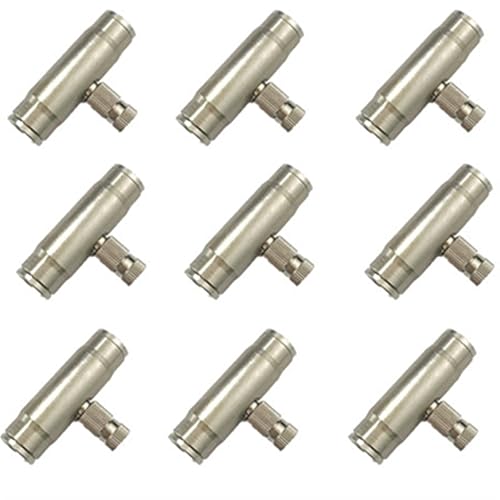 20-Piece Stainless Steel Misting Nozzle Kit (High Pressure, 3/16-inch)
 BN-LINK Short Period Repeat Cycle Intermittent Timer
 GROWNEER 50-Pack 2-Inch Slotted Mesh Net Pots
 BN-LINK Short Period Repeat Cycle Digital Timer (1-sec to 23-hr intervals)
 50-Piece Stainless Steel Misting Nozzle Kit (Anti-Drip, 0.3 mm Orifice)20-Piece Stainless Steel Misting Nozzle Kit (High Pressure, 3/16-inch)
 Nutraponics Aeroponics Tower Garden (48-Plant, External Pump)