Quick Answer
This guide compares the best aeroponic tower systems for 2026 — including Tower Garden FLEX, Lettuce Grow Farmstand, and DIY builds — helping urban farmers evaluate price versus yield for their growing space. --- What should you look for when buying an aeroponic tower system? Aeroponic and tower garden systems grow plants vertically, spraying nutrient solution onto bare roots suspended…
Some links in this article are affiliate links. If you purchase through them, we may earn a small commission — at no extra cost to you.
This guide compares the best aeroponic tower systems for 2026 — including Tower Garden FLEX, Lettuce Grow Farmstand, and DIY builds — helping urban farmers evaluate price versus yield for their growing space.
What should you look for when buying an aeroponic tower system?
Aeroponic and tower garden systems grow plants vertically, spraying nutrient solution onto bare roots suspended in air. This approach uses 95% less water than soil gardening and can produce impressive yields in a small footprint, but choosing the wrong system leads to pump failures, clogged nozzles, and disappointing harvests.
Number of growing sites. Tower systems range from 20 to 52+ growing ports. More sites mean more potential production, but also more nutrient solution needed and more surface area to manage. For a family of four growing leafy greens, 20–28 sites is usually adequate. Serious growers or those looking to supplement grocery spending significantly should consider 36+ sites.
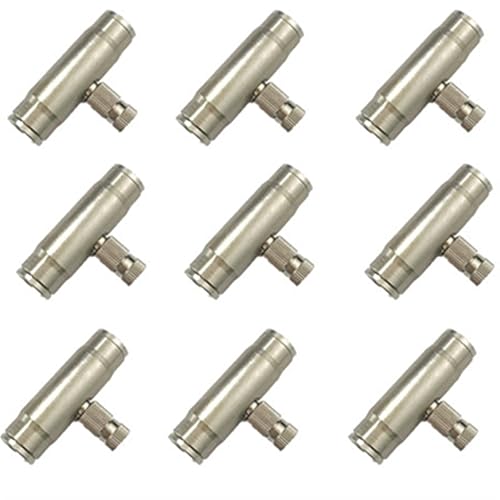
Pump and spray system quality. The pump is the most failure-prone component. Look for systems where the pump is submersible and easily replaceable, and where nozzles can be cleaned or replaced. Tower Garden FLEX uses a patented spray system; Lettuce Grow uses a drip ring. Both have different clogging profiles with different water qualities.
Indoor vs outdoor versatility. Some towers (Tower Garden HOME) are designed for indoor use with a built-in light stand. Others (Tower Garden FLEX) are optimised for outdoor use in direct sunlight but can be adapted for indoor growing with separate grow lights. Clarify your intended environment before purchasing.
Reservoir capacity. Larger reservoirs require less frequent nutrient topping. Towers with 20-gallon reservoirs need attention every few days in summer heat; smaller 5–7 gallon bases need daily management in warm weather.
Warranty and support. Tower Garden (Juice Plus brand) has the most established customer support network in this category. Lettuce Grow has strong community support and frequent updates. DIY builders rely on community forums.
What are the best aeroponic tower systems in 2026?
| Product | Growing Sites | Price | Reservoir | Best For | Rating |
|---|---|---|---|---|---|
| Tower Garden FLEX | 20–28 sites | ~$695–$875 | 20 gal | Outdoor/patio growing, serious home growers | 4.7/5 |
| Lettuce Grow Farmstand | 12–36 sites | ~$495–$895 | 8 gal | Indoor and outdoor, beginners who want support | 4.6/5 |
| Juice Plus Tower Garden HOME | 20 sites + lights | ~$895 | 20 gal | Dedicated indoor growing | 4.5/5 |
| VegeBox Tower (Budget) | 24 sites | ~$150–$200 | 6 gal | Budget-conscious beginners | 3.8/5 |
| DIY PVC Tower (Build) | 20–50+ sites | ~$50–$150 | Variable | Experienced DIYers who want maximum value | 4.2/5 |
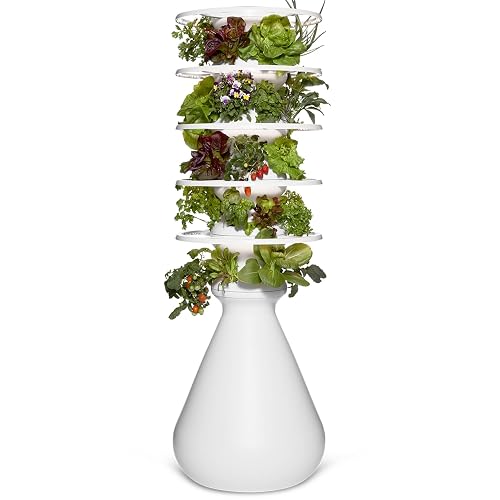
Tower Garden FLEX is the benchmark commercial-grade home aeroponic tower. Its rotomolded construction is UV-resistant and built to last outdoors for years. The 20-gallon reservoir reduces refill frequency. The spray jets are designed to be unclogged without disassembly. Tower Garden also offers an extensive seed and seedling programme, making starting easier. The premium price is justified by build quality and longevity.
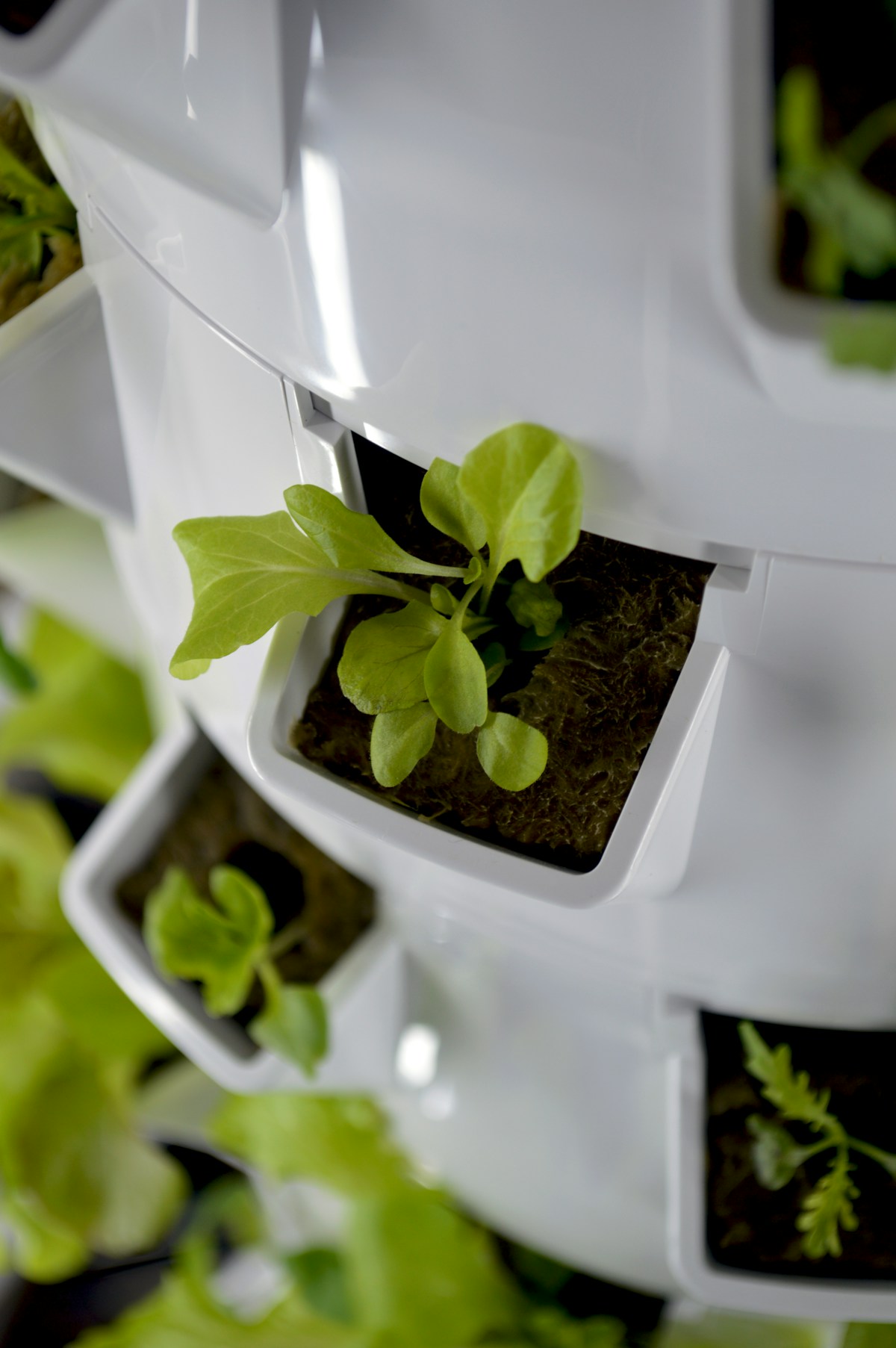
Lettuce Grow Farmstand distinguishes itself with its focus on beginner accessibility. The Farmstand ships as a complete kit with growing pods, a seedling service option, and a highly active online community. The stacked ring design is easy to assemble and reconfigure. Indoor models have optional LED light stands. The 8-gallon reservoir is smaller than ideal for warm outdoor conditions, but is adequate for indoor use where evaporation is lower.
Tower Garden HOME is the same FLEX technology adapted for indoor use with a purpose-built LED light stand. It is the most turnkey indoor option in this category, though the light stand adds significantly to the footprint.
VegeBox and similar budget towers from Amazon offer an entry point under $200. The pump quality is the main weak point — budget on a replacement pump (EcoPlus or similar, ~$15–20) before you need one. For growing lettuce and herbs, they work adequately, though nozzle clogging is more frequent with hard water.
How do aeroponic towers compare for beginners vs advanced growers?
Beginners are best served by the Lettuce Grow Farmstand for its community, customer support, and the optional seedling delivery service that eliminates the need to start from seed initially. The guided app and feeding schedule remove much of the guesswork.
Intermediate growers who have already grown in soil or basic hydroponics and understand pH and EC management will find the Tower Garden FLEX's larger reservoir and sturdier construction worth the premium, especially for outdoor growing.
Advanced growers or those looking to maximise yield per dollar often build DIY towers from PVC pipe with custom pump and timer setups. A well-built DIY tower can have 40–50 growing sites for $100–$150 in materials, dramatically outperforming the commercial options on a cost-per-plant basis. The trade-off is the time investment in design, building, and troubleshooting.
Are there budget aeroponic tower options worth considering?
Yes, but with clear expectations. The VegeBox and similar Amazon towers in the $150–$200 range genuinely grow plants. The main limitations are:
Pump longevity. Budget tower pumps often fail within one to two growing seasons. Keeping a spare submersible pump on hand (an EcoPlus 132 or similar, ~$12) prevents a pump failure from killing an entire crop.
Reservoir size. A 6-gallon reservoir in a 28-site tower during summer can require daily topping. In hot weather, plants in an aeroponic tower can transpire significant volumes. Budget for time as well as money.
DIY builds represent the best value for anyone willing to invest a weekend. PVC towers with 2-inch net cup holes, a submersible pump, and a timer can be built for $50–$100 and outperform commercial budget options in durability and expandability. Plans and tutorials are widely available online.