Quick Answer
A typical home indoor farm with 400W of LED lighting costs $20–35/month in electricity. Energy is the dominant ongoing cost for indoor growing. LEDs are 40–60% more efficient than HPS for the same plant output, making light choice the single highest-impact decision for long-term operating costs. --- How Do LED and HPS Compare in Real Power Draw? The wattage on…
A typical home indoor farm with 400W of LED lighting costs $20–35/month in electricity. Energy is the dominant ongoing cost for indoor growing. LEDs are 40–60% more efficient than HPS for the same plant output, making light choice the single highest-impact decision for long-term operating costs.
How Do LED and HPS Compare in Real Power Draw?
The wattage on a light fixture label is only part of the story. What matters is how much usable plant light (µmol/s of PAR) you get per watt of electricity consumed.
LED vs HPS power reality:
A 600W HPS system draws 600W at the bulb plus 30–50W for the magnetic ballast = 630–650W total. In a warm room, it also forces your air conditioner to work harder — generating roughly 2,000 BTU/hr of additional heat load.
A 600W LED quantum board draws 600W at the driver and produces ~30–50% more usable PAR than the HPS system. In real terms, you can achieve the same PPFD at canopy with 400–450W of high-efficiency LED as you would need 600W of HPS to deliver.
Apples-to-apples PPFD comparison:
| Light Technology | Watts to Achieve 600 µmol/m²/s over 1m² | Annual kWh (18h/day) | Annual Cost at $0.15/kWh |
|---|---|---|---|
| Budget LED (1.5 µmol/J) | 400W | 2,628 kWh | $394 |
| Mid-range LED (2.5 µmol/J) | 240W | 1,577 kWh | $237 |
| Top-tier LED (3.2 µmol/J) | 188W | 1,234 kWh | $185 |
| HPS 600W (1.7 µmol/J) | 600W | 3,942 kWh | $591 |
| T5 HO (1.1 µmol/J) | 545W | 3,580 kWh | $537 |
The top-tier LED system costs $406 less per year to run than a comparable HPS system for a single 1m² canopy. Over 5 years at constant rates, that is $2,030 in savings — enough to justify significant upfront premium for quality LEDs.
How Do You Calculate kWh Costs for Your Setup?
Electricity cost calculation is straightforward:
Formula: (Watts ÷ 1,000) × Hours per day × Days per year × Cost per kWh = Annual cost ($)
Example calculations:
| Setup Description | Watts | Hours/Day | Days/Year | Rate ($/kWh) | Annual Cost |
|---|---|---|---|---|---|
| Single T5 fixture (4-tube), seedlings | 96W | 16 | 365 | $0.15 | $84 |
| Small LED setup (200W), leafy greens | 200W | 16 | 365 | $0.15 | $175 |
| 50 sq ft LED grow (400W) | 400W | 16 | 365 | $0.15 | $350 |
| 100 sq ft LED grow (800W) | 800W | 16 | 365 | $0.15 | $701 |
| 100 sq ft HPS grow (1000W) | 1,000W | 16 | 365 | $0.15 | $876 |
| Small greenhouse supplement (200W LED) | 200W | 8 | 180 | $0.15 | $44 |
Don't forget ancillary loads:
Lights are typically 70–80% of total energy use in a grow room. The remainder:
| Equipment | Typical Watts | Notes |
|---|---|---|
| Inline exhaust fan (small) | 30–80W | Runs continuously |
| Circulation fans (2×) | 20–40W | Runs continuously |
| Water pump (hydroponic) | 5–25W | Runs on timer |
| Heat mat (propagation) | 20–40W | Runs on thermostat |
| Small dehumidifier | 200–400W | Runs as needed |
| Mini-split AC (small) | 500–1,000W | Runs as needed in summer |
A 50 sq ft grow room with 400W lights plus ancillary equipment typically draws 450–500W total when lights are on, and 100–150W when lights are off (fans, pumps).
What Is the Cost Per Gram or Per Head Produced?
Understanding cost per unit of output helps justify the investment and identify efficiency improvements.
Lettuce (hydroponic NFT, 50 sq ft room):
- Monthly electricity cost: $30–40
- Nutrient cost: $8–15/month
- Packaging/miscellaneous: $5/month
- Total monthly operating cost: $43–60
- Monthly yield at good management: 40–60 heads
- Cost per head (operating only): $0.75–1.50
- Retail value per head: $2.50–4.00
- Gross margin: 60–70%
Microgreens (tray-based, 50 sq ft room, 6 trays cycling):
- Monthly electricity cost: $25–35
- Seed cost: $15–30/month
- Substrate/packaging: $10–15/month
- Total monthly operating cost: $50–80
- Monthly yield: 8–12 lbs
- Cost per lb (operating only): $5–8
- Selling price at farmers market: $20–30/lb
- Gross margin: 70–80%
These figures exclude setup costs (lights, racks, systems), which are capital expenditure typically amortised over 3–5 years.
What Are the Most Effective Ways to Reduce Energy Use?
High-impact changes:
-
Upgrade to high-efficiency LEDs: Replacing a 600W HPS with a 300W high-efficiency LED (same PPFD output) cuts lighting electricity in half. Payback period: 12–18 months from electricity savings alone.
-
Dial in your photoperiod: Running lights 18 hours for crops that perform equally well at 16 hours wastes 11% of lighting energy. Use the minimum effective photoperiod for each crop.
-
Insulate your grow space: An insulated grow room requires less heating in winter and less cooling in summer. Rigid foam insulation on walls and ceiling pays for itself quickly in climate-controlled environments.
-
Use a timer-based dehumidifier: Dehumidifiers running 24/7 are often overkill. Program them to run only during the lights-on period (when transpiration is highest) or use an RH controller.
-
Reduce light height and increase reflection: Mylar reflective sheeting on walls increases effective PPFD by 10–30% without using more electricity. This can allow you to reduce light intensity settings proportionally.
-
Time-of-use electricity optimisation: In regions with time-of-use pricing, shifting your lights-on window to off-peak hours (typically 9pm–7am) can reduce effective electricity costs by 20–40%.
Lower-impact but still worthwhile:
- Replace fans with EC (electronically commutated) motor fans — 30–50% more efficient than AC induction fans
- Use LED strips instead of rope lighting for propagation areas
- Install occupancy sensors to prevent lights staying on in unoccupied processing areas
Frequently Asked Questions
How much does it cost to run a single grow light?
Is solar power a viable option to offset indoor farming electricity costs?
Do LED grow lights lose efficiency over time and cost more to run?
Some links in this article are affiliate links. If you purchase through them, we may earn a small commission — at no extra cost to you.
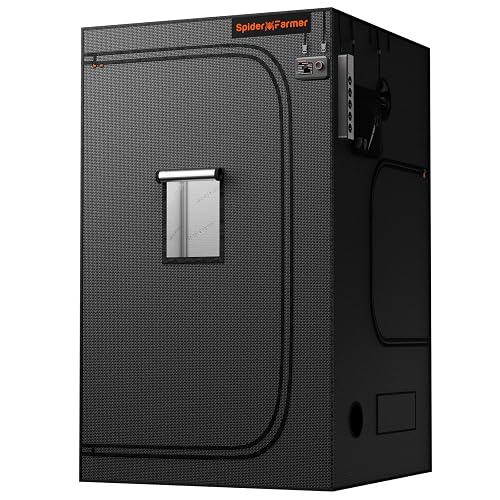 Vivosun Grow Tent (4×4 ft)
 BN-LINK Short Period Repeat Cycle Intermittent Timer
 INKBIRD WiFi Thermometer Hygrometer IBS-TH5 (9-in-1, 2-Year Data Storage)
 VIVOSUN DWC Hydroponics Grow System with Top Drip Kit (4-Bucket)
 VIVOSUN 317GPH Commercial Air Pump (6-outlet)
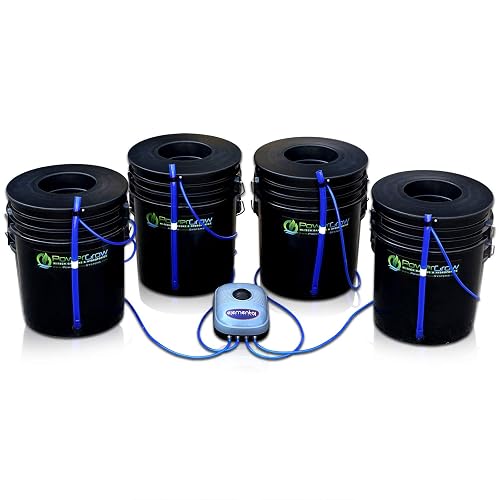 PowerGrow Systems DWC Hydroponic Bubbler Bucket Kit (4×5 Gal)
 General Hydroponics Flora Series 3-Part Nutrient System (1 qt each)
 General Hydroponics pH Control Kit (pH Up, pH Down, Test Indicator)INKBIRD WiFi Thermometer Hygrometer IBS-TH5 (9-in-1, 2-Year Data Storage)

