Quick Answer
VPD (Vapour Pressure Deficit) is the master metric for indoor climate control. Maintain VPD between 0.8–1.2 kPa during vegetative growth and 1.2–1.6 kPa during flowering. Temperature and humidity targets must be dialled in together, not independently. --- What Is VPD and Why Does It Matter More Than Temperature Alone? Growers often fixate on temperature and humidity as separate variables. VPD…
VPD (Vapour Pressure Deficit) is the master metric for indoor climate control. Maintain VPD between 0.8–1.2 kPa during vegetative growth and 1.2–1.6 kPa during flowering. Temperature and humidity targets must be dialled in together, not independently.
What Is VPD and Why Does It Matter More Than Temperature Alone?
Growers often fixate on temperature and humidity as separate variables. VPD combines them into a single number that reflects how hard plants are working to transpire — and how efficiently they are taking up nutrients.
VPD is the difference between the water vapour pressure inside a leaf and the water vapour pressure of the surrounding air. When VPD is too low (high humidity, warm air), transpiration slows, nutrient uptake drops, and fungal diseases thrive. When VPD is too high (low humidity, hot air), plants close stomata to prevent desiccation, halting CO2 uptake and growth.
VPD calculation simplified: VPD = SVP(leaf temperature) − SVP(air) × (RH/100)
Where SVP is the Saturated Vapour Pressure at a given temperature. Leaf temperature is typically 1–2°C below air temperature for well-ventilated canopies.
In practice, use a VPD chart or calculator. Set your temperature first based on crop requirements, then adjust humidity to hit your target VPD zone.
What Are the Ideal Temperature and Humidity Ranges by Growth Stage?
| Growth Stage | Air Temp (°C) | Relative Humidity | Target VPD (kPa) |
|---|---|---|---|
| Germination / cloning | 22–26 | 70–80% | 0.4–0.8 |
| Early seedling | 22–26 | 65–75% | 0.6–1.0 |
| Vegetative | 22–28 | 55–70% | 0.8–1.2 |
| Early flowering | 20–26 | 50–60% | 1.0–1.4 |
| Late flowering / ripening | 18–24 | 40–50% | 1.2–1.6 |
| Post-harvest drying | 18–22 | 45–55% | — |
Night temperature drops of 5–8°C below daytime are beneficial for many crops, triggering natural stress responses that improve flavour and in some crops (lettuce) reduce tip burn.
Avoid temperature fluctuations greater than 10°C within a single light cycle — rapid swings stress plants and can trigger premature bolting in leafy greens.
How Do You Size an AC Unit or Dehumidifier for a Grow Room?
Air Conditioning (Cooling)
Heat load calculation:
- Sum all electrical inputs in the room: lights + fans + pumps = X watts
- All electrical energy converts to heat. 1 watt = 3.41 BTU/hr
- Add solar gain (if the room has exterior walls or windows): estimate 10–20 BTU/hr per sq ft of sun-exposed surface
- Add occupant load: 250 BTU/hr per person
Total BTU/hr ÷ 12,000 = tonnes of cooling required
Example: A 100 sq ft grow room with 1,000W of lights, 200W of fans/pumps, no solar gain: (1,200W × 3.41) = 4,092 BTU/hr → a 5,000–6,000 BTU portable AC is adequate.
Mini-split systems are strongly preferred over portable ACs for grow rooms. Portables exhaust hot air through a duct, which creates negative pressure and requires makeup air. Mini-splits are sealed systems with no air exchange, giving you full control over the environment.
Dehumidification
Sizing rule: 1 pint/day of dehumidification capacity per 10 sq ft of canopy, adjusted upward if your HVAC cannot remove adequate latent heat.
| Grow Room Size | Recommended Dehumidifier |
|---|---|
| Up to 50 sq ft | 30-pint/day unit |
| 50–150 sq ft | 50-pint/day unit |
| 150–300 sq ft | 70–90 pint/day or commercial unit |
| 300+ sq ft | Commercial dehumidifier (dedicated drain line) |
Always plumb dehumidifiers to a floor drain or condensate pump — manually emptying tanks is unsustainable for serious growing operations.
What Tools Do You Need to Monitor Grow Room Climate?
Essential monitoring tools:
- Temp/RH sensor with data logging: Budget options (Inkbird, SensorPush) log at 2–5 minute intervals and alert you to excursions via smartphone app. Minimum one sensor per grow zone.
- Infrared thermometer: Spot-check leaf surface temperature for accurate VPD calculations. Leaf temp matters more than air temp for VPD.
- CO2 monitor: If supplementing CO2, an NDIR sensor is required. Avoid electrochemical (TVOC-type) CO2 sensors — they are inaccurate for growing applications.
Automation controllers:
| Controller | Features | Price Range |
|---|---|---|
| Inkbird IBS-TH3 | Temp/RH logging, Bluetooth | $15–25 |
| Govee H5179 | Temp/RH, WiFi, app alerts | $20–35 |
| Inkbird IHC-200 | Humidity controller with outlet | $30–50 |
| Trolmaster Hydro-X | Full climate automation (temp, RH, CO2, light) | $300–500 |
| Autopilot APCENV1 | Multi-sensor environmental controller | $200–350 |
For a serious grow room, invest in a controller that can independently manage your AC, dehumidifier, humidifier, and CO2 device based on sensor readings. Manual adjustment is a liability — a single hot summer day can crash a crop if nobody is monitoring.
Frequently Asked Questions
My humidity is too high but I cannot afford a dehumidifier. What can I do?
Can temperatures drop too low at night for indoor crops?
Should I measure temperature at canopy level or in the middle of the room?
Some links in this article are affiliate links. If you purchase through them, we may earn a small commission — at no extra cost to you.
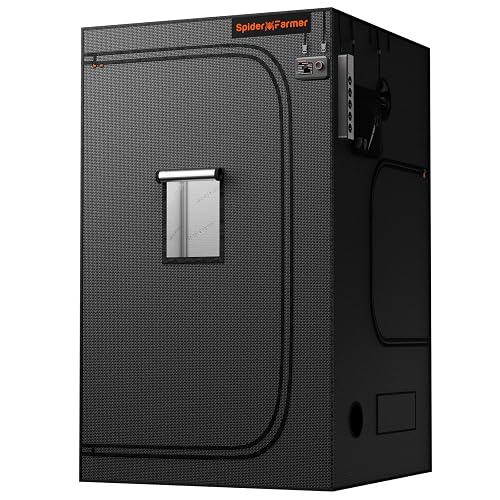 AC Infinity CLOUDLAB 894 Advance Grow Tent (4×8 ft, 2000D)
 Inkbird ICC-500T CO₂ Controller and CO₂ Meter
 AC Infinity Peristaltic Dosing Pump (21–210 mL/min)AC Infinity CLOUDLAB 894 Advance Grow Tent (4×8 ft, 2000D)
 AC Infinity Controller 69 PRO (Temp, Humidity, VPD, Schedule)
 Bluelab IntelliDose Controller Kit (pH, EC, Wi-Fi Dosing)AC Infinity Controller 69 PRO (Temp, Humidity, VPD, Schedule)AC Infinity CLOUDLAB 894 Advance Grow Tent (4×8 ft, 2000D)Inkbird ICC-500T CO₂ Controller and CO₂ Meter