Quick Answer
Hydroponic radishes mature in just 25–30 days from seed, making them one of the fastest root crops in any soilless system. They thrive in Dutch buckets and DWC setups at EC 1.0–1.8, pH 6.0–7.0, and moderate light of 400–600 µmol/m²/s — ideal for beginners who want a quick, satisfying first harvest. --- How do you sow radish seeds directly in…
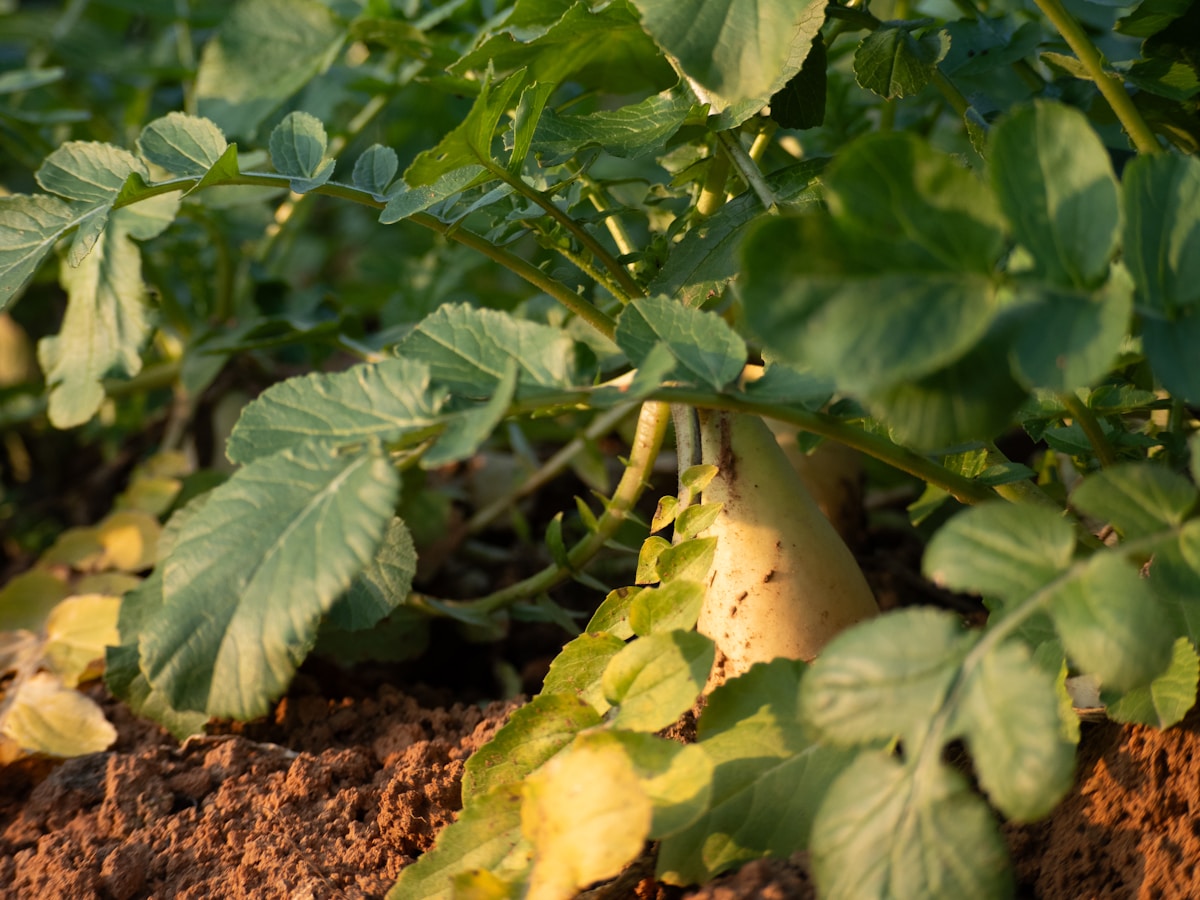
Hydroponic radishes mature in just 25–30 days from seed, making them one of the fastest root crops in any soilless system. They thrive in Dutch buckets and DWC setups at EC 1.0–1.8, pH 6.0–7.0, and moderate light of 400–600 µmol/m²/s — ideal for beginners who want a quick, satisfying first harvest.
How do you sow radish seeds directly in a hydroponic system?
Radishes are direct-seeded — transplanting disrupts root development and leads to forked or stunted bulbs. Sow seeds directly into the growing medium or substrate where they will mature.
Direct seeding in Dutch buckets: Fill Dutch buckets (2–3 litre capacity is sufficient per plant) with expanded clay pebbles or a 50/50 mix of clay pebbles and perlite. Pre-moisten the medium with pH-adjusted water (6.0–6.5). Press 2–3 seeds into the top 1 cm of substrate per bucket, then thin to a single seedling once the first true leaves appear. The Dutch bucket drip system delivers nutrients directly to the root zone, which suits the taproot's downward growth.
Direct seeding in DWC: In a deep water culture system, place a moistened rockwool or coco coir cube in each net pot and sow 2–3 seeds per cube. Position the net pot so the bottom of the cube just touches the nutrient solution during germination. Once seedlings are established (day 5–8), lower the solution level by 2–3 cm to create an air gap that encourages root branching. Thin to one seedling per net pot at day 7. Germination at 18–24°C is reliable within 3–5 days.
Variety selection matters for hydroponics. Cherry Belle, French Breakfast, and Saxa are all compact varieties suited to container culture. Avoid long daikon-type radishes in DWC — their taproots can reach 20–30 cm and become tangled in DWC baskets.
How do you nurture hydroponic radish seedlings through early growth?
Radish seedlings are among the least demanding of any soilless crop, but specific parameter windows produce the swollen, mild-tasting bulbs rather than stringy, hot roots.
Nutrient parameters:
- EC: 0.8–1.2 mS/cm during seedling phase (days 1–10); raise to 1.4–1.8 mS/cm once the hypocotyl begins to swell
- pH: 6.0–7.0 — radishes are more pH-tolerant than leafy crops and perform well anywhere in this range
- Nitrogen: keep nitrogen moderate. Excess nitrogen promotes leaf growth at the expense of root swelling. Switch to a lower-nitrogen formula as soon as swelling begins (around day 12–15)
- Phosphorus and potassium: ensure adequate P and K for root development; a bloom-phase formula works well during bulbing
Temperature: Optimal root temperature is 15–20°C. Above 25°C, radishes bolt and become pithy, hot, and hollow. In India, this means hydroponic radish growing is most successful during October–February in plains regions. In summer, radishes can be grown in climate-controlled grow tents where air temperature is maintained below 24°C.
Water temperature: Keep the reservoir below 22°C. Warm water reduces dissolved oxygen, which impairs root development and promotes soft rot bacteria that attack radish taproots specifically.
How do you care for radishes to prevent splitting and pithiness?
Radish quality problems — hollow centres, cracking skin, excessive pungency — all stem from inconsistent water and nutrient delivery. The taproot's rapid expansion in the final week makes consistent conditions especially critical.
Thinning is non-negotiable: Overcrowded radishes produce small, misshapen bulbs that compete for space. If you sow multiple seeds per net pot or Dutch bucket, thin ruthlessly to one plant per position at day 7. Snip weaker seedlings at the soil line rather than pulling, which can disturb the surviving root.
Root space: Each radish plant needs adequate lateral space in the growing medium to develop a round bulb. In DWC net pots, use at minimum a 7.5 cm (3 inch) net pot; in Dutch buckets, ensure buckets are spaced at least 10 cm apart. Crowded root systems produce elongated, forked bulbs rather than round ones.
Preventing cracking: Skin cracking happens when radishes receive inconsistent irrigation — drought followed by flooding. In DWC, maintain a stable solution level in the final week rather than allowing it to drop significantly. In Dutch buckets, run the drip timer on 2–4 cycles per day during bulbing rather than once daily.
Pungency control: The compounds that make radishes hot (glucosinolates, particularly glucoraphenin) increase with heat and water stress. Consistent cool temperatures and regular feeding directly reduce sharpness. Mild radishes are a direct result of stable conditions.
How long do hydroponic radishes take to harvest, and how do you know they are ready?
Radishes are the fastest large-scale edible root crop in soilless systems — most varieties reach harvest between 25 and 30 days from sowing.
| Stage | Days from Sowing | What to Look For |
|---|---|---|
| Germination | 3–5 days | Seed coat splits, white radicle visible |
| First true leaves | 7–10 days | Cotyledons open, first true leaf unfurls |
| Hypocotyl swelling begins | 12–15 days | Base of stem begins to thicken |
| Bulb half-sized | 18–22 days | Visible round or oblong swelling above substrate |
| Harvest ready | 25–30 days | Bulb 2–4 cm in diameter, firm to touch |
| Over-mature | 35+ days | Skin cracks, centre becomes pithy, flavour sharpens |
Harvest technique: Grasp the stem base just above the bulb and pull straight upward in one smooth motion. In Dutch buckets with clay pebbles, gently move the substrate aside to locate and free the root. In DWC, lift the entire net pot and slide the bulb out of the basket carefully.
Harvest promptly at maturity — radishes left in the system for more than a week past peak readiness become pithy, hollow, and unpleasantly hot. Unlike lettuce, there is no useful post-maturity holding window.
Storage: Fresh hydroponic radishes store well for 5–7 days in the refrigerator with leaves removed (leaves draw moisture from the root). Store roots in a perforated plastic bag in the crisper drawer.
What is the nutritional value of hydroponically grown radishes?
Radishes are a low-calorie, high-fibre root vegetable with notable micronutrient and bioactive compound content. Their rapid growth cycle means they retain high levels of water-soluble nutrients at harvest.
| Nutrient / Compound | Per 100g Fresh | Notes |
|---|---|---|
| Vitamin C | 14.8 mg (16% DV) | Water-soluble; declines within 48 hours of harvest |
| Folate (B9) | 25 µg (6% DV) | Important for cell division and DNA synthesis |
| Potassium | 233 mg (5% DV) | Electrolyte; supports blood pressure regulation |
| Dietary fibre | 1.6 g (6% DV) | Including both soluble and insoluble fractions |
| Glucosinolates | Variable | Hydrolysed to isothiocyanates; studied for anticarcinogenic properties |
| Anthocyanins | In red varieties only | Antioxidant; concentrated in the skin |
| Calories | 16 kcal | Very low energy density |
Hydroponic versus soil comparison: Hydroponically grown radishes show comparable vitamin C levels to field-grown radishes when harvested at the same maturity. Flavour pungency (glucosinolate levels) can be modulated through nutrient management — lower sulphur in the nutrient solution produces milder bulbs.
In Indian cuisine, radishes (mooli) are used raw in salads, cooked in mooli paratha, mooli sabzi, and pickled. Hydroponic Cherry Belle radishes are well-suited to raw consumption; Daikon-type varieties for cooking can be grown in Dutch buckets if sufficient root depth (30 cm+) is provided.
Frequently Asked Questions
Why are my hydroponic radishes hollow inside?
Can radishes be grown in a Kratky system?
How many radishes can I grow per square foot of hydroponic space?
Some links in this article are affiliate links. If you purchase through them, we may earn a small commission — at no extra cost to you.
 General Hydroponics Flora Series 3-Part Nutrient System (1 qt each)
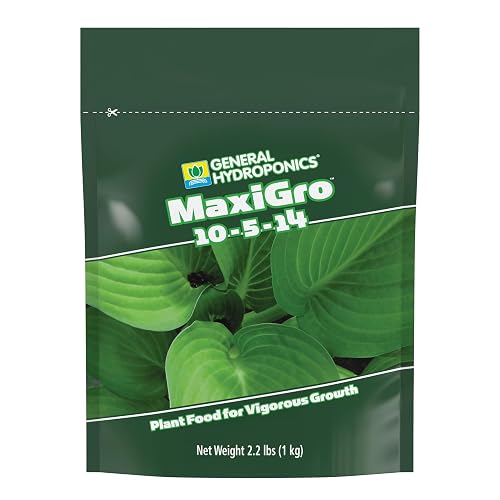 General Hydroponics pH Control Kit (pH Up, pH Down, Test Indicator)
 INKBIRD WiFi Thermometer Hygrometer IBS-TH5 (9-in-1, 2-Year Data Storage)
 GRODAN A-OK Rockwool Starter Cubes (1.5-inch, Sheet of 98 Plugs)
 GROWNEER 50-Pack 2-Inch Slotted Mesh Net PotsGeneral Hydroponics Flora Series 3-Part Nutrient System (1 qt each)General Hydroponics pH Control Kit (pH Up, pH Down, Test Indicator)
 Bluelab Truncheon Nutrient Meter (EC/TDS/CF)
 PGN Clay Pebbles for Hydroponics (10 Liters, pH Neutral LECA)