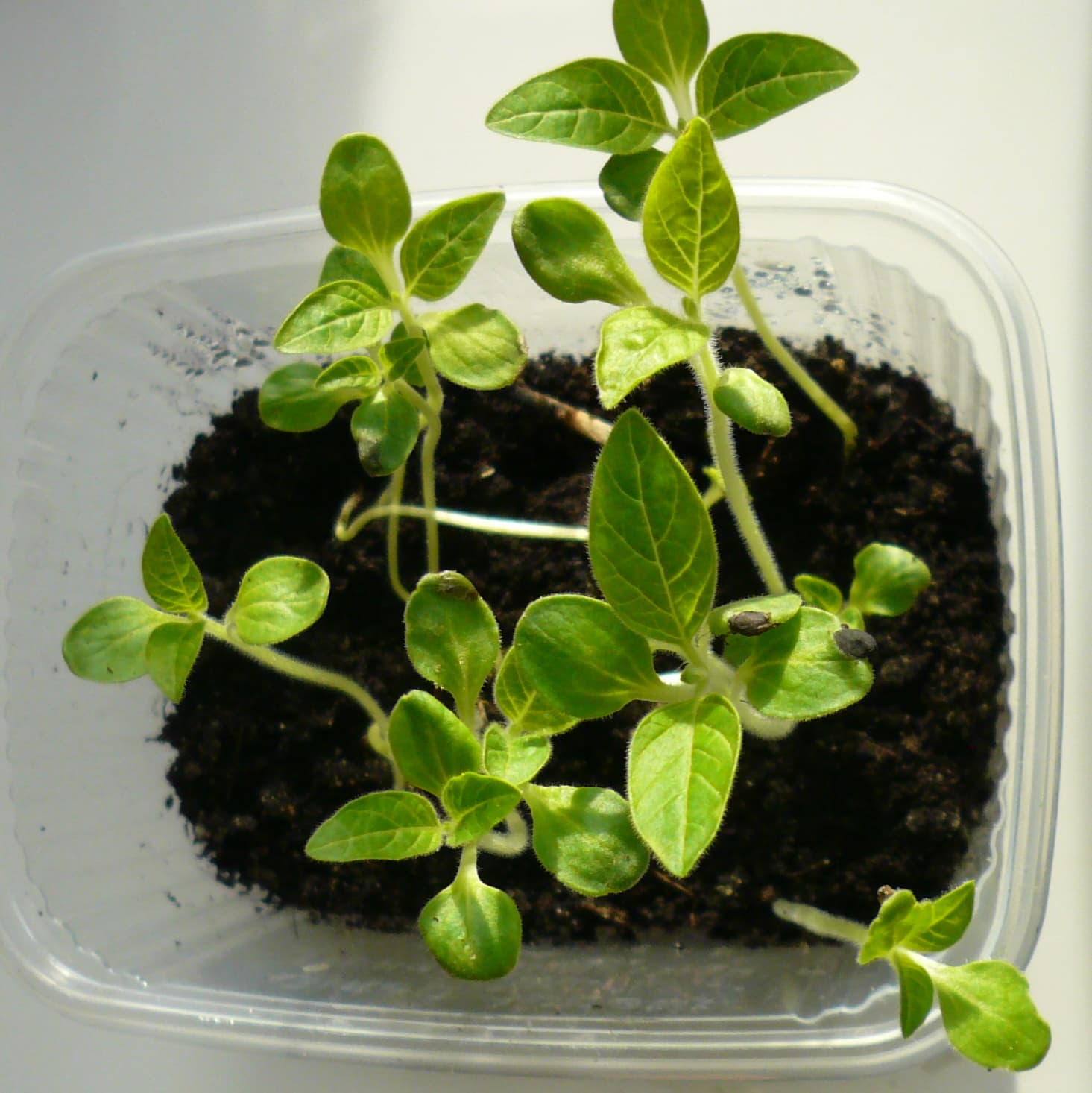
Soilless growing supports hundreds of crops — from leafy greens like lettuce and spinach ready in 30 days, to fruiting crops like tomatoes and peppers in 70–100 days. Nutrient solution replaces soil minerals, producing yields equal to or exceeding conventional farming with 90% less water.
What crop categories grow well without soil?
Soilless systems — hydroponics, aeroponics, aquaponics — can support virtually every major food crop category. Understanding which group a plant belongs to helps you choose the right system and set realistic expectations.
Leafy greens are the fastest and easiest. Lettuce, spinach, arugula, kale, and bok choy have short roots, modest nutrient demands, and cycle in 28–45 days. They tolerate passive systems like Kratky jars and simple DWC setups.
Herbs are similarly fast and compact. Basil, cilantro, parsley, mint, and chives thrive in low-EC nutrient solution with strong light. Many can be harvested continuously for months from a single planting.
Fruiting crops — tomatoes, peppers, cucumbers, aubergine — are more demanding. They need higher electrical conductivity (EC), active root-zone oxygenation, physical support structures, and significantly more light (DLI 20–35 mol/m²/day). The payoff is high yield over a long growing season.
Root vegetables present the greatest challenge. Carrots, beetroot, and radishes can be grown in inert media (coco coir, perlite) but never in open-water systems. They need physical substrate for tuber formation.
Microgreens and wheatgrass sit in a category of their own — grown on shallow trays of coco coir or hemp mats, ready in 7–14 days, and among the most nutrient-dense foods per gram produced.
How does nutrient solution replace soil minerals?
Soil works by holding a reservoir of dissolved minerals that plant roots extract through osmotic pressure. A hydroponic nutrient solution does exactly the same thing — but the grower controls the composition precisely.
A complete nutrient solution supplies all 17 essential plant nutrients: macronutrients (nitrogen, phosphorus, potassium, calcium, magnesium, sulfur) and micronutrients (iron, manganese, zinc, copper, boron, molybdenum, chlorine, nickel). Commercial two- or three-part hydroponic nutrients cover all of these.
The key metrics are:
- EC (Electrical Conductivity): measures total dissolved minerals. Leafy greens target 0.8–1.6 mS/cm; fruiting crops 2.0–3.5 mS/cm.
- pH: governs nutrient availability at the root surface. The soilless sweet spot is 5.5–6.5, with 6.0–6.2 optimal for most crops.
Unlike soil, which buffers pH changes slowly, hydroponic solution pH can shift within hours. Daily monitoring is standard practice during active growth phases.
Which growing system suits which crop?
Matching crop to system prevents the most common beginner failures.
| Crop Category | Best System(s) | Why |
|---|---|---|
| Lettuce, spinach | Kratky, DWC, NFT | Low nutrient demand, shallow roots, thrives passive |
| Herbs (basil, cilantro) | Kratky, DWC, aeroponics | Fast growth, compact root mass |
| Tomatoes, cucumbers | Drip-to-waste, Dutch bucket | Need high EC, support, media for root volume |
| Peppers | Dutch bucket, drip | Deep roots, long season, high light demand |
| Strawberries | NFT, vertical towers | Runners need space, drainage critical |
| Microgreens | Shallow trays, hemp mats | No reservoir needed, one-shot harvest |
| Wheatgrass | Shallow trays, jute mats | Needs only water and warmth for 7 days |
| Root vegetables | Deep media beds (coco/perlite) | Need physical substrate for tuber formation |
DWC and Kratky excel at simplicity for short-cycle crops. Active drip systems with Dutch buckets are the industry standard for long-season fruiting crops. Aeroponics delivers maximum oxygen to roots but demands more precision and equipment reliability.
What is the harvest timeline from seed to plate?
Planning successive plantings requires knowing expected days from transplant (or seed) to first harvest.
| Crop | Days to First Harvest | Harvest Type | Grow Temp (°C) |
|---|---|---|---|
| Wheatgrass | 7–10 | Once (whole tray) | 18–22 |
| Microgreens (mixed) | 10–14 | Once (scissors harvest) | 18–24 |
| Radish | 25–30 | Once (whole plant) | 10–18 |
| Lettuce (loose-leaf) | 28–35 | Cut-and-come-again | 16–22 |
| Spinach | 35–42 | Outer leaf removal | 10–20 |
| Basil | 35–40 | Pinch-and-regrow | 20–27 |
| Kale | 40–55 | Outer leaf removal | 10–20 |
| Cucumber | 55–70 | Continuous fruiting | 22–28 |
| Tomatoes | 70–90 | Continuous fruiting | 20–26 |
| Peppers | 80–100 | Continuous fruiting | 22–28 |
| Strawberries | 60–90 (from runner) | Continuous fruiting | 15–22 |
Days are from transplant of established seedling, not from seed. Germination typically adds 5–14 days depending on species and temperature.
How does soilless nutrition compare to soil-grown produce?
The nutritional value of soilless produce is functionally equivalent to well-managed soil-grown produce — and often superior to commercially farmed vegetables that travel long distances. The key driver is harvest-to-table freshness.
A 2021 meta-analysis in the journal Foods found that hydroponic tomatoes had comparable or higher levels of lycopene and vitamin C compared to soil-grown counterparts when lighting conditions were equivalent.
| Nutrient Factor | Soilless | Conventional Soil | Notes |
|---|---|---|---|
| Vitamin C | Equal to higher | Baseline | Degrades rapidly post-harvest; shorter supply chain helps |
| Lycopene (tomatoes) | Equal to higher | Baseline | Light quality and stress affect production |
| Nitrate levels | Controllable | Variable | Can be reduced by flushing before harvest |
| Pesticide residue | Very low to none | Present in many crops | Controlled environment reduces pest pressure |
| Mineral content | Formulated | Soil-dependent | Grower controls micro-nutrient levels precisely |
One nuance: nitrate accumulation in leafy greens. Spinach and lettuce grown with excessive nitrogen under low light can accumulate nitrates. Managing the nitrogen-to-potassium ratio and harvesting under adequate light minimises this.
What is the easiest crop combination for a first soilless garden?
For a complete beginner, a three-crop starter set covers all bases without overcomplicating the system:
- Lettuce (butterhead or romaine) — in a Kratky container or DWC bucket; fast, forgiving, immediately useful.
- Basil — shares identical pH and EC parameters with lettuce; can share the same reservoir.
- Cherry tomatoes — in a 3–5 gallon Dutch bucket with a drip system; introduces fruiting crop mechanics and a longer-season challenge.
Start with leafy greens for the first two cycles to understand pH and EC management. Introduce fruiting crops once you're confident adjusting nutrients daily.