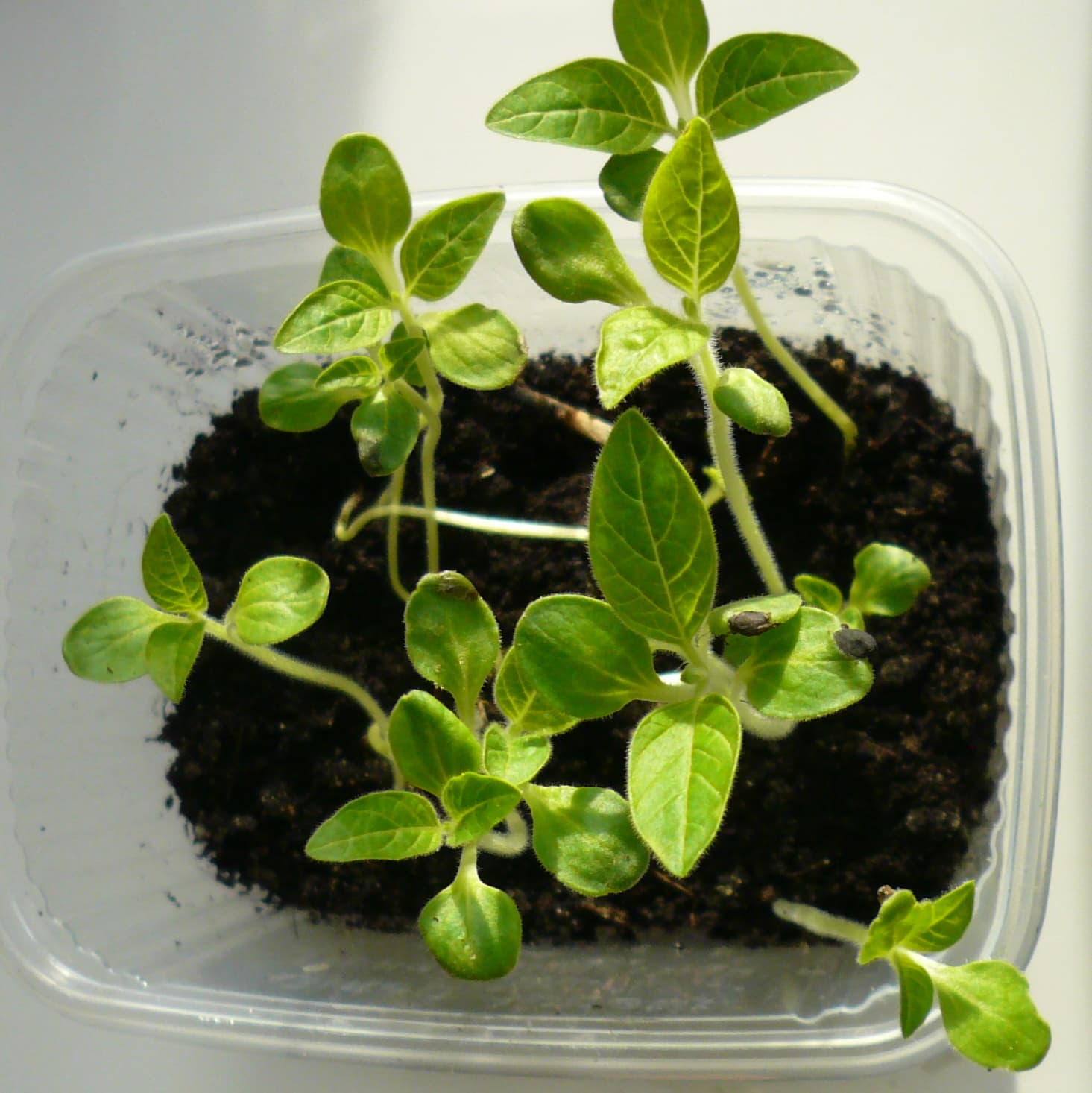
Hydroponic basil grows at 20–27°C with EC 0.7–1.4 and pH 5.5–6.5, reaching first harvest in 35–40 days from seed. Regular pinching above leaf nodes produces bushy, multi-branching plants that yield continuously for 3–4 months without replanting.
Why is basil the gateway herb for soilless growing?
Basil (Ocimum basilicum) is the most commercially successful hydroponic herb globally — and for good reason. It grows fast, shares near-identical nutrient parameters with lettuce (making co-cultivation simple), produces a high-value product with intense flavour, and signals stress visibly and quickly enough to allow correction before permanent damage occurs.
The commercial hydroponic basil market is substantial: supermarket basil sold as a "live herb" pot is almost universally hydroponically grown in glasshouses across the Netherlands, the UK, and increasingly across North America. Understanding how to grow basil soillessly is understanding the commercial herb production model at small scale.
For the home grower, the rewards are practical: fresh basil at supermarket quality is expensive and short-lived. A single DWC or Kratky container producing 4–6 basil plants provides continuous harvest for the cost of one or two retail bunches per month.
Variety note: Genovese (sweet basil) is the standard culinary type and the most reliable for beginners. Thai basil, lemon basil, and purple basil have slightly different EC tolerances but all respond well to soilless growing.
How do you sow basil seeds for a soilless system?
Basil is sown directly into the growing medium rather than transplanted from a separate seedling tray, though both methods work.
Direct sow into net pots:
- Place a rockwool cube or coco coir plug in the net pot.
- Drop 4–6 seeds on the surface of the moistened cube. Basil seeds need light to germinate — do not bury them.
- Mist with pH-adjusted water (5.5–6.0) and place under a humidity dome.
- Maintain temperature at 22–26°C. Germination occurs in 4–7 days at this range. Below 18°C, germination is slow and patchy.
- Remove humidity dome immediately upon germination.
- Thin to 1–2 seedlings per net pot at day 14 by snipping weaker seedlings at the base. Overcrowded basil develops fungal issues in humid soilless environments.
Transplant method (for precise spacing): Germinate in rockwool trays, then transplant cubes with seedlings into net pots at day 14–18. This allows selection of the strongest seedlings and is preferred for larger growing setups.
How do you nurture basil through its seedling phase?
Basil seedlings (days 7–21) are robust but responsive to conditions in ways that directly affect flavour quality later.
Nutrient parameters:
- EC: 0.5–0.8 mS/cm during seedling phase; raise to 0.7–1.4 mS/cm after true leaves appear
- pH: 5.5–6.5, with 6.0 as the optimal midpoint
- Nitrogen balance: basil benefits from slightly higher nitrogen relative to potassium during vegetative growth; a general-purpose vegetative formula (e.g., 3-1-2 NPK ratio) is appropriate
Temperature and light:
- Optimal temperature: 20–27°C. Basil is genuinely cold-sensitive — temperatures below 15°C cause blackening of leaves and stunted growth, while temperatures above 30°C accelerate bolting.
- Light requirement: 200–450 PPFD, 14–16 hours per day. Higher light intensity within this range directly increases essential oil content (primarily eugenol and linalool) — more light produces more aromatic, flavourful basil.
- DLI target: 12–20 mol/m²/day
Humidity: Keep below 70% RH. Basil is susceptible to downy mildew (Peronospora belbahrii) in high-humidity conditions, particularly when leaves remain wet overnight.
How do you care for basil to maximise yield?
Proper ongoing care is what separates a bushy, productive basil plant from a single thin stem that bolts within six weeks.
Pinching for branching: This is the single most important technique for basil management. When a plant reaches 15–20 cm with 3–4 pairs of leaves, pinch out the growing tip just above the second set of true leaves. Each pinched tip produces two new branches. Repeat every 7–10 days to build an exponentially branching structure. Pinching also delays bolting.
Removing flower buds: As soon as a flower spike (a vertical stem with tiny white flowers) appears, remove it entirely. Once basil enters reproductive mode (bolting), essential oil production shifts to seed development and leaf quality declines sharply. Commercial basil growers use daylength management and pruning to delay bolting. In a soilless system, maintaining below 16 hours of light per day helps.
Humidity management in enclosed systems: In grow tents or enclosed cabinets, run an oscillating fan to promote air circulation. This reduces both humidity at the leaf surface and incidence of fungal disease. It also physically strengthens stems, preventing lodging under the weight of mature foliage.
How do you harvest basil from a soilless system?
Basil can be harvested from the same plant every 7–14 days for 3–4 months when managed correctly.
Harvest technique:
- Cut the stem just above a leaf node — the point where two leaves branch from the stem. New growth will emerge from both axils below the cut.
- Never remove more than one-third of the plant's leaf mass at a single harvest. Over-harvesting weakens the plant and slows recovery.
- Harvest in the morning after the lights have been on for 2–4 hours — essential oil concentration peaks mid-morning.
- Use sharp, clean scissors or snips. Tearing or crushing the stem causes browning.
A well-managed basil plant in a DWC system will produce 30–60 g of harvestable leaf per harvest cycle, with 6–8 harvest cycles possible before quality declines significantly.
Storage: Fresh basil stores poorly in the refrigerator (cold damages the leaves, causing blackening). Store at room temperature in a glass of water like cut flowers, loosely covered with a plastic bag. Use within 5–7 days.
What is the nutritional value of soilless basil?
Basil is used in small quantities, so its macro-nutritional contribution is minor. Its value lies in phytochemicals — particularly essential oils with documented biological activity.
| Compound / Nutrient | Per 100g Fresh | Notes |
|---|---|---|
| Eugenol | 1–7 mg (varies by variety) | Primary phenolic; anti-inflammatory, antimicrobial |
| Linalool | Present | Terpene; calming and aromatic properties |
| Vitamin K | 414 µg (414% DV) | Very high; caution for anticoagulant users |
| Vitamin A | 264 µg RAE (29% DV) | As β-carotene |
| Vitamin C | 18 mg (20% DV) | Declines rapidly post-harvest |
| Manganese | 1.1 mg (48% DV) | Supports enzyme function and bone metabolism |
| Calcium | 177 mg (14% DV) | Higher bioavailability than spinach (lower oxalate) |
Soilless versus field comparison: Hydroponic basil grown under high-intensity light (DLI >15 mol/m²/day) consistently shows 20–40% higher essential oil content compared to greenhouse-grown soil basil. Essential oils are synthesised in leaf gland cells as a response to light stress — more light drives more production.
Frequently Asked Questions
Why is my hydroponic basil turning black?
Should I remove basil flowers?
Can basil grow in a Kratky system?
title: "Basil: Sowing, Caring and Harvesting Soillessly" lastUpdated: "2026-03-23" farmingMethod: crops level: beginner slug: crops/basil
Last updated: March 23, 2026
Hydroponic basil grows at 20–27°C with EC 0.7–1.4 and pH 5.5–6.5, reaching first harvest in 35–40 days from seed. Regular pinching above leaf nodes produces bushy, multi-branching plants that yield continuously for 3–4 months without replanting.
Why is basil the gateway herb for soilless growing?
Basil (Ocimum basilicum) is the most commercially successful hydroponic herb globally — and for good reason. It grows fast, shares near-identical nutrient parameters with lettuce (making co-cultivation simple), produces a high-value product with intense flavour, and signals stress visibly and quickly enough to allow correction before permanent damage occurs.
The commercial hydroponic basil market is substantial: supermarket basil sold as a "live herb" pot is almost universally hydroponically grown in glasshouses across the Netherlands, the UK, and increasingly across North America. Understanding how to grow basil soillessly is understanding the commercial herb production model at small scale.
For the home grower, the rewards are practical: fresh basil at supermarket quality is expensive and short-lived. A single DWC or Kratky container producing 4–6 basil plants provides continuous harvest for the cost of one or two retail bunches per month.
Variety note: Genovese (sweet basil) is the standard culinary type and the most reliable for beginners. Thai basil, lemon basil, and purple basil have slightly different EC tolerances but all respond well to soilless growing.
How do you sow basil seeds for a soilless system?
Basil is sown directly into the growing medium rather than transplanted from a separate seedling tray, though both methods work.
Direct sow into net pots:
- Place a rockwool cube or coco coir plug in the net pot.
- Drop 4–6 seeds on the surface of the moistened cube. Basil seeds need light to germinate — do not bury them.
- Mist with pH-adjusted water (5.5–6.0) and place under a humidity dome.
- Maintain temperature at 22–26°C. Germination occurs in 4–7 days at this range. Below 18°C, germination is slow and patchy.
- Remove humidity dome immediately upon germination.
- Thin to 1–2 seedlings per net pot at day 14 by snipping weaker seedlings at the base. Overcrowded basil develops fungal issues in humid soilless environments.
Transplant method (for precise spacing): Germinate in rockwool trays, then transplant cubes with seedlings into net pots at day 14–18. This allows selection of the strongest seedlings and is preferred for larger growing setups.
How do you nurture basil through its seedling phase?
Basil seedlings (days 7–21) are robust but responsive to conditions in ways that directly affect flavour quality later.
Nutrient parameters:
- EC: 0.5–0.8 mS/cm during seedling phase; raise to 0.7–1.4 mS/cm after true leaves appear
- pH: 5.5–6.5, with 6.0 as the optimal midpoint
- Nitrogen balance: basil benefits from slightly higher nitrogen relative to potassium during vegetative growth; a general-purpose vegetative formula (e.g., 3-1-2 NPK ratio) is appropriate
Temperature and light:
- Optimal temperature: 20–27°C. Basil is genuinely cold-sensitive — temperatures below 15°C cause blackening of leaves and stunted growth, while temperatures above 30°C accelerate bolting.
- Light requirement: 200–450 PPFD, 14–16 hours per day. Higher light intensity within this range directly increases essential oil content (primarily eugenol and linalool) — more light produces more aromatic, flavourful basil.
- DLI target: 12–20 mol/m²/day
Humidity: Keep below 70% RH. Basil is susceptible to downy mildew (Peronospora belbahrii) in high-humidity conditions, particularly when leaves remain wet overnight.
How do you care for basil to maximise yield?
Proper ongoing care is what separates a bushy, productive basil plant from a single thin stem that bolts within six weeks.
Pinching for branching: This is the single most important technique for basil management. When a plant reaches 15–20 cm with 3–4 pairs of leaves, pinch out the growing tip just above the second set of true leaves. Each pinched tip produces two new branches. Repeat every 7–10 days to build an exponentially branching structure. Pinching also delays bolting.
Removing flower buds: As soon as a flower spike (a vertical stem with tiny white flowers) appears, remove it entirely. Once basil enters reproductive mode (bolting), essential oil production shifts to seed development and leaf quality declines sharply. Commercial basil growers use daylength management and pruning to delay bolting. In a soilless system, maintaining below 16 hours of light per day helps.
Humidity management in enclosed systems: In grow tents or enclosed cabinets, run an oscillating fan to promote air circulation. This reduces both humidity at the leaf surface and incidence of fungal disease. It also physically strengthens stems, preventing lodging under the weight of mature foliage.
How do you harvest basil from a soilless system?
Basil can be harvested from the same plant every 7–14 days for 3–4 months when managed correctly.
Harvest technique:
- Cut the stem just above a leaf node — the point where two leaves branch from the stem. New growth will emerge from both axils below the cut.
- Never remove more than one-third of the plant's leaf mass at a single harvest. Over-harvesting weakens the plant and slows recovery.
- Harvest in the morning after the lights have been on for 2–4 hours — essential oil concentration peaks mid-morning.
- Use sharp, clean scissors or snips. Tearing or crushing the stem causes browning.
A well-managed basil plant in a DWC system will produce 30–60 g of harvestable leaf per harvest cycle, with 6–8 harvest cycles possible before quality declines significantly.
Storage: Fresh basil stores poorly in the refrigerator (cold damages the leaves, causing blackening). Store at room temperature in a glass of water like cut flowers, loosely covered with a plastic bag. Use within 5–7 days.
What is the nutritional value of soilless basil?
Basil is used in small quantities, so its macro-nutritional contribution is minor. Its value lies in phytochemicals — particularly essential oils with documented biological activity.
| Compound / Nutrient | Per 100g Fresh | Notes |
|---|---|---|
| Eugenol | 1–7 mg (varies by variety) | Primary phenolic; anti-inflammatory, antimicrobial |
| Linalool | Present | Terpene; calming and aromatic properties |
| Vitamin K | 414 µg (414% DV) | Very high; caution for anticoagulant users |
| Vitamin A | 264 µg RAE (29% DV) | As β-carotene |
| Vitamin C | 18 mg (20% DV) | Declines rapidly post-harvest |
| Manganese | 1.1 mg (48% DV) | Supports enzyme function and bone metabolism |
| Calcium | 177 mg (14% DV) | Higher bioavailability than spinach (lower oxalate) |
Soilless versus field comparison: Hydroponic basil grown under high-intensity light (DLI >15 mol/m²/day) consistently shows 20–40% higher essential oil content compared to greenhouse-grown soil basil. Essential oils are synthesised in leaf gland cells as a response to light stress — more light drives more production.