Quick Answer
LED grow lights deliver the best efficiency (2.5–3.5 µmol/J), run cooler, and last 50,000+ hours. T5 fluorescents suit seedlings and microgreens. HPS remains cost-effective for large-scale flowering but generates significant heat and higher operating costs. --- What Do PAR and PPFD Actually Mean? PAR — Photosynthetically Active Radiation — refers to light in the 400–700 nm wavelength range that plants…
LED grow lights deliver the best efficiency (2.5–3.5 µmol/J), run cooler, and last 50,000+ hours. T5 fluorescents suit seedlings and microgreens. HPS remains cost-effective for large-scale flowering but generates significant heat and higher operating costs.
What Do PAR and PPFD Actually Mean?
PAR — Photosynthetically Active Radiation — refers to light in the 400–700 nm wavelength range that plants use for photosynthesis. Not all lumens are equal: a bulb bright to the human eye may deliver very little usable light to a plant.
PPFD (Photosynthetic Photon Flux Density) measures the number of photons in the PAR range landing on a surface per second, expressed in µmol/m²/s. This is the number you should optimise for your grow space.
Typical PPFD targets by crop stage:
| Growth Stage | Target PPFD (µmol/m²/s) |
|---|---|
| Germination / seedlings | 100–200 |
| Vegetative (leafy greens) | 200–400 |
| Vegetative (fruiting crops) | 400–600 |
| Flowering / fruiting | 600–1000 |
| High-light crops (tomatoes) | 800–1200 |
DLI (Daily Light Integral) combines PPFD and photoperiod. Multiply PPFD × hours of light × 0.0036 to get mol/m²/day. Most leafy greens need 12–17 mol/m²/day; tomatoes and peppers need 20–30 mol/m²/day.
How Does LED Efficiency Compare to Other Technologies?
LED efficiency is measured in µmol/J (micromoles of PAR photons produced per joule of electricity consumed). Higher is better.
| Light Type | Efficiency (µmol/J) | Lifespan (hours) | Heat Output |
|---|---|---|---|
| Budget LED panel | 1.0–1.5 | 30,000 | Low–Medium |
| Mid-range LED (quantum board) | 2.0–2.8 | 50,000 | Low |
| Top-tier LED (Samsung LM301H) | 2.8–3.5 | 50,000+ | Low |
| T5 fluorescent | 0.9–1.2 | 15,000–20,000 | Low–Medium |
| T8 fluorescent | 0.7–1.0 | 15,000 | Low–Medium |
| HPS (High-Pressure Sodium) | 1.4–1.9 | 10,000–24,000 | Very High |
| CMH / LEC | 1.5–2.1 | 20,000 | Medium–High |
Modern quantum board LEDs using Samsung LM301H or LM301B diodes consistently hit 2.8–3.2 µmol/J in real-world testing. At scale, this efficiency gap translates directly into lower electricity bills and less heat management overhead.
Full-spectrum LEDs also allow dialling in specific wavelengths. Red (660 nm) drives flowering; blue (440–470 nm) promotes compact vegetative growth; far-red (730 nm) triggers the Emerson enhancement effect, speeding up photosynthesis.
When Should You Choose T5 Fluorescent Lights?
T5 fluorescents remain the workhorse for seed starting and microgreens. Their advantages in these niches are real:
- Even canopy coverage: T5 panels spread light uniformly across a flat tray, ideal for germination flats and microgreen trays.
- Low heat, close placement: T5 tubes can be positioned 5–10 cm above seedlings without burning, accelerating early growth.
- Low upfront cost: A 4-tube T5 fixture costs significantly less than a comparable LED quantum board.
- Simplicity: No drivers, no dimming controllers needed for basic setups.
Limitations: T5 efficiency (0.9–1.2 µmol/J) means higher electricity costs over time. They are not suitable as a primary light for fruiting crops. Replace tubes every 12–18 months as output degrades before visible failure.
T8 and T12 fluorescents are largely obsolete for growing — use T5 HO (high output) only.
Is HPS Still Worth Using for Flowering Crops?
HPS bulbs produce a yellow-orange spectrum (peak ~595 nm) that works well for flowering and fruiting. Despite lower efficiency than LEDs, HPS retains legitimate use cases:
- Large commercial grows: The upfront capital cost for LED across thousands of square feet remains higher than HPS.
- Cold climates: HPS heat output can offset heating costs in cold grow rooms, partially neutralising the efficiency disadvantage.
- Proven results: Decades of commercial tomato and cannabis cultivation data exist for HPS.
For home growers and small urban farms, the case for new HPS installations has weakened significantly. The break-even point on LED vs HPS — accounting for electricity savings — now sits at 12–24 months for most setups, after which LED delivers ongoing savings.
If you have existing HPS infrastructure, a conversion to LED is still worthwhile when bulbs need replacement. Running HPS in summer without supplemental cooling adds significant HVAC costs.
Cost Comparison: Running 500W of Light for One Year
| Metric | LED (2.8 µmol/J) | HPS | T5 Fluorescent |
|---|---|---|---|
| Actual wattage drawn | 500 W | 500 W | 500 W |
| PPFD output at 60 cm | ~1000 µmol/m²/s | ~700 µmol/m²/s | ~300 µmol/m²/s |
| Annual kWh (18h/day) | 3,285 kWh | 3,285 kWh | 3,285 kWh |
| Annual cost at $0.15/kWh | $493 | $493 | $493 |
| Replacement bulbs/year | None | ~$40 | ~$60 |
| Cooling cost premium | Low | High (+$100–200) | Low |
The key insight: at the same wattage, LED delivers more usable light to the plant canopy, meaning you can achieve the same PPFD with fewer watts.
Frequently Asked Questions
How far should grow lights be from plants?
Do plants need a dark period, or can I run lights 24 hours?
What is the difference between a "blurple" LED and a full-spectrum LED?
Some links in this article are affiliate links. If you purchase through them, we may earn a small commission — at no extra cost to you.
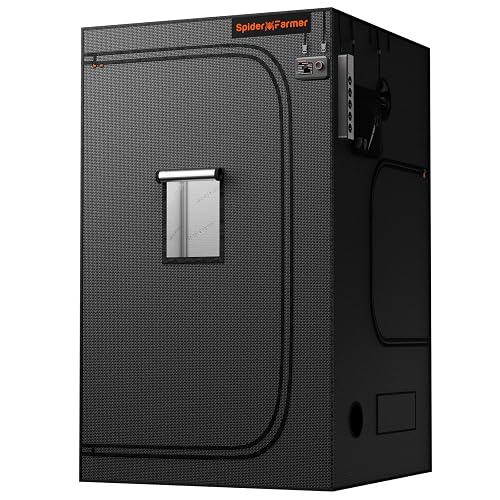 Vivosun Grow Tent (4×4 ft)
 BN-LINK Short Period Repeat Cycle Intermittent Timer
 INKBIRD WiFi Thermometer Hygrometer IBS-TH5 (9-in-1, 2-Year Data Storage)Vivosun Grow Tent (4×4 ft)BN-LINK Short Period Repeat Cycle Intermittent TimerINKBIRD WiFi Thermometer Hygrometer IBS-TH5 (9-in-1, 2-Year Data Storage)
 VIVOSUN DWC Hydroponics Grow System with Top Drip Kit (4-Bucket)
 VIVOSUN 317GPH Commercial Air Pump (6-outlet)
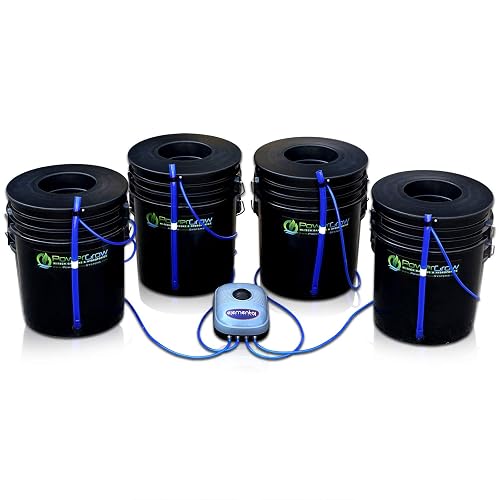 PowerGrow Systems DWC Hydroponic Bubbler Bucket Kit (4×5 Gal)
