Quick Answer
Tower Garden is a polished commercial aeroponic tower costing $600–$900 that offers plug-and-play simplicity, while a DIY aeroponic tower built for $60–$100 requires more setup effort but delivers comparable growing performance and far greater customization freedom. --- How Do Tower Garden and DIY Systems Compare on Cost? Cost is typically the first factor that drives growers toward a DIY build,…
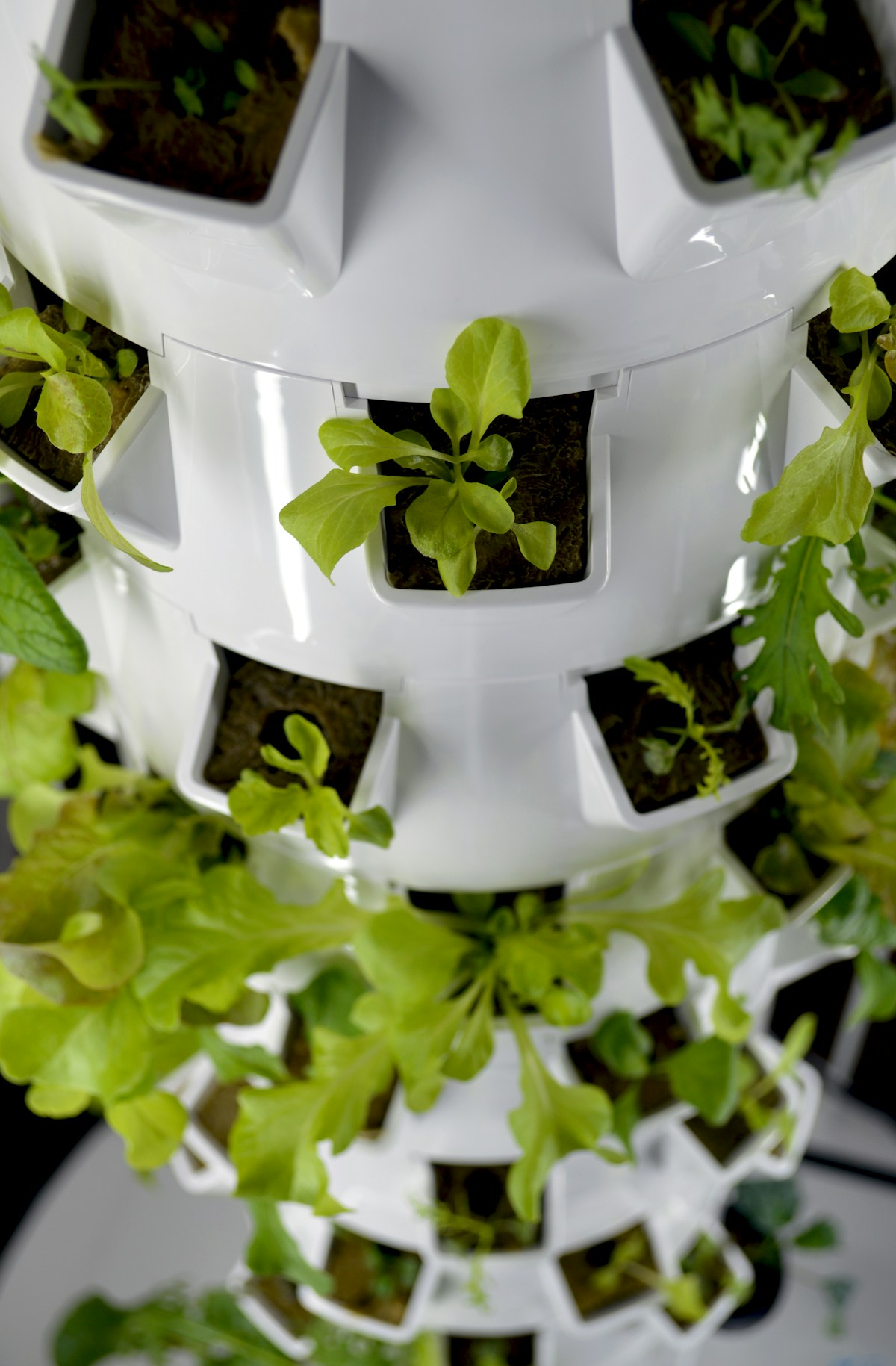
Tower Garden is a polished commercial aeroponic tower costing $600–$900 that offers plug-and-play simplicity, while a DIY aeroponic tower built for $60–$100 requires more setup effort but delivers comparable growing performance and far greater customization freedom.
How Do Tower Garden and DIY Systems Compare on Cost?
Cost is typically the first factor that drives growers toward a DIY build, and the gap is significant.
| Cost Category | Tower Garden (HOME) | DIY Tower |
|---|---|---|
| Initial purchase | $595–$895 | $60–$100 |
| Nutrient solution (per year) | $80–$120 (proprietary blend) | $40–$60 (generic 2-part) |
| Replacement parts (per year) | $20–$50 | $10–$30 |
| Grow lights (if indoor) | $150–$300 (sold separately) | $50–$200 |
| Year 1 total (indoor) | $845–$1,265 | $160–$390 |
Tower Garden's proprietary nutrient solution is sold at a premium compared to generic two-part hydroponic formulas that perform identically. Over three years of use, the cost differential between the two approaches can exceed $2,000 for a serious home grower running multiple towers.
That said, Tower Garden's upfront purchase includes a tested, warrantied system with customer support — value that has real worth for someone who has no experience building or troubleshooting irrigation systems.
How Does Growing Performance Compare?
Both systems deliver aeroponic-style nutrient delivery and both can grow the same range of crops. The differences are subtle but worth understanding.
Tower Garden uses a low-pressure pump (approximately 150–250 GPH) that circulates nutrient solution up the central column and distributes it through a simple manifold. The design is closer to a deep-flow system than true high-pressure aeroponics — roots receive a continuous nutrient stream rather than an intermittent mist. This is effective but not the fastest possible growth mode.
DIY towers built with a similar pond pump and internal spray manifold perform comparably to Tower Garden. If the DIY build uses a higher-pressure pump and smaller spray orifices, it can outperform Tower Garden in root oxygenation and growth rate.
In independent home-grower tests, growth rates between Tower Garden and well-built DIY towers using the same nutrients and lighting conditions are within 10–15% of each other — a difference that is largely undetectable at the household scale.
| Performance Metric | Tower Garden | DIY Tower |
|---|---|---|
| Lettuce to harvest | 28–35 days | 28–40 days |
| Plants per tower (28-site model) | 20 (recommended) | 20–28 |
| Water consumption | ~2 gallons/week | ~2–3 gallons/week |
| Crop variety support | All leafy + small fruiting | All leafy + small fruiting |
| True HPA possible? | No | Yes (with upgrade) |
Which System Is Easier to Maintain?
Maintenance is where Tower Garden earns its price premium for many users.
Tower Garden maintenance:
- Refill reservoir and adjust pH every 2–3 days
- Full nutrient change every 3 weeks
- Seasonal cleaning with provided cleaning kit
- No custom plumbing to inspect or repair
- Dedicated customer support line and video tutorials
DIY tower maintenance:
- Same nutrient and pH tasks
- Must inspect homemade manifold for clogged holes or cracks
- Pump warranty depends on which pump was purchased
- Troubleshooting requires understanding your own build
- Community forums (not corporate support) are the resource
For a person who finds satisfaction in tinkering, DIY maintenance is part of the hobby. For someone who wants to grow food with minimal mental overhead, Tower Garden's standardized maintenance routines and support infrastructure genuinely reduce friction.
Who Should Choose Tower Garden and Who Should Build DIY?
The right choice depends on personal priorities, not just price.
Choose Tower Garden if:
- You have no prior experience with hydroponics or plumbing and want a system that works out of the box
- You value warranty coverage and manufacturer support
- You plan to use the system long-term and want a durable, UV-stabilized polycarbonate tower (Tower Garden's material is notably robust)
- Budget is not a primary constraint and the simplicity premium is worth it to you
- You want an aesthetically clean system for a living space or patio
Build a DIY tower if:
- You enjoy building things and learning how systems work
- Budget is limited and you want to test aeroponic growing before committing to a commercial product
- You want to customize: additional plant sites, specific nozzle types, larger reservoir, or the ability to upgrade to high-pressure components later
- You are setting up multiple towers — the cost savings multiply dramatically at scale
- You already have some hydroponic experience and understand nutrient management
The hybrid path: Some growers start with one Tower Garden unit, learn the fundamentals of aeroponic cultivation, and then build DIY towers for expansion at a fraction of the per-tower cost.
Frequently Asked Questions
Is Tower Garden actually aeroponics or just a marketing term?
Can I make a DIY tower look as polished as a Tower Garden?
Does Tower Garden come with a warranty?
Some links in this article are affiliate links. If you purchase through them, we may earn a small commission — at no extra cost to you.
 General Hydroponics Flora Series (FloraGro, FloraBloom, FloraMicro)
 Apera Instruments PC60 pH/EC/TDS/Temp Meter
 GROWNEER 50-Pack 2-Inch Slotted Mesh Net PotsGROWNEER 50-Pack 2-Inch Slotted Mesh Net Pots
 General Hydroponics pH Control Kit (pH Up, pH Down, Test Indicator)
 BN-LINK Short Period Repeat Cycle Intermittent TimerApera Instruments PC60 pH/EC/TDS/Temp MeterGeneral Hydroponics pH Control Kit (pH Up, pH Down, Test Indicator)
 Bluelab pH 4.0 and 7.0 Calibration Solution Kit (500 ml each)
