Quick Answer
This guide compares countertop hydroponic systems — AeroGarden, iDOO, and QYO — across pod capacity, light wattage, cost, and who each system is best suited for, helping you choose the right all-in-one unit for your kitchen or home. --- What should you look for when buying a countertop hydroponic system? Countertop hydroponic systems are the simplest entry point into hydroponic…
Some links in this article are affiliate links. If you purchase through them, we may earn a small commission — at no extra cost to you.
This guide compares countertop hydroponic systems — AeroGarden, iDOO, and QYO — across pod capacity, light wattage, cost, and who each system is best suited for, helping you choose the right all-in-one unit for your kitchen or home.
What should you look for when buying a countertop hydroponic system?
Countertop hydroponic systems are the simplest entry point into hydroponic growing. They require no setup beyond adding water and pods, no knowledge of nutrient mixing, and no external lighting. They are designed to sit on a kitchen counter and grow fresh herbs, lettuces, and small vegetables year-round.
Pod capacity. Systems range from 3-pod units (AeroGarden Sprout) to 24-pod units (larger iDOO models). More pods mean more production but also a larger footprint. For a single-person household growing fresh herbs for cooking, 3–6 pods is adequate. For a family wanting to supplement salad greens and herbs meaningfully, 9–12 pods is more useful.
Light wattage and spectrum. The built-in grow light is the most important performance variable in countertop systems. More wattage (and better spectrum) means faster growth, denser plants, and higher yields. AeroGarden's lights (particularly the 20W and 45W models) are generally rated higher than equivalently priced iDOO and QYO units. For fruiting plants like cherry tomatoes, look for systems with at least 20–45W of LED lighting.
Reservoir capacity. A larger reservoir means less frequent water additions. Small 3-pod systems may have 1-gallon reservoirs requiring water every 2–3 days. Larger 9-pod and 24-pod systems have 2–4 gallon reservoirs that may only need weekly attention.
Nutrient system. Most countertop systems use proprietary liquid nutrients. AeroGarden's Liquid Nutrients work well but are expensive per bottle. iDOO and QYO systems can often use General Hydroponics Flora Series or other standard hydroponic nutrients at a fraction of the cost, though this requires measuring and mixing rather than squeezing a bottle.
Pod and seed availability. AeroGarden has the widest selection of pre-seeded pod kits (herbs, salsa garden, tomatoes, peppers, flowers). iDOO and QYO are more open systems where you can use blank pods and any seeds you choose, which significantly reduces ongoing seed costs.
What are the best countertop hydroponic systems in 2026?
| Product | Pods | Light | Reservoir | Price | Nutrients | Best For | Rating |
|---|---|---|---|---|---|---|---|
| AeroGarden Harvest Elite | 6 pods | 20W LED | 1.5 gal | ~$120 | Proprietary | Beginners wanting the easiest experience | 4.8/5 |
| AeroGarden Bounty Elite | 9 pods | 45W LED | 2.5 gal | ~$180 | Proprietary | Serious herb and small vegetable growing | 4.8/5 |
| iDOO 12-Pod | 12 pods | 23W LED | 2 gal | ~$90 | Standard compatible | Budget-conscious beginners, large pod count | 4.4/5 |
| QYO 12-Pod Hydroponics | 12 pods | 25W LED | 2 gal | ~$80 | Standard compatible | Value seekers, open-pod flexibility | 4.3/5 |
| AeroGarden Farm 24 XL | 24 pods | 60W LED | 4 gal | ~$350 | Proprietary | Serious home growers, near-daily harvest | 4.7/5 |
AeroGarden Harvest Elite is the most-sold countertop hydroponic system for a reason. The 6-pod format is sized right for a kitchen counter, the 20W LED produces adequate light for herbs and lettuces, and the AeroGarden app makes setup and maintenance completely guided. The automatic light timer, water level indicator, and nutrient reminder take the management complexity down to near zero. It is the single best recommendation for someone who has never grown anything hydroponically.
AeroGarden Bounty Elite is the upgrade that makes sense once you have experienced the Harvest and want more production. The 9-pod, 45W format is a meaningful step up — the extra light wattage makes it genuinely suitable for cherry tomatoes and peppers, where the Harvest's 20W is marginal. The adjustable arm accommodates taller plants. If budget allows, start with the Bounty rather than the Harvest and skip the upgrade step.
iDOO 12-Pod offers 12 pods at a price lower than the 6-pod AeroGarden Harvest. The trade-off is that the 23W LED is spread across more pods (lower average light intensity per plant), and the build quality and app support lag behind AeroGarden. However, iDOO systems accept blank pods and standard hydroponic nutrients, which substantially reduces ongoing costs. Strong choice for budget-conscious growers primarily interested in lettuce and herbs.
QYO 12-Pod is similar in concept to iDOO at a slightly lower price. The light quality (25W) is adequate for herbs and leafy greens. QYO's systems tend toward simpler, more open designs — fewer proprietary constraints, more ability to use your own seeds and nutrients. Less polished than AeroGarden but more flexible for experienced growers.
AeroGarden Farm 24 XL is the flagship countertop system — a 24-pod, 60W unit that produces near-daily harvests of herbs and lettuces for a family. At $350, it is a serious investment, but it delivers the output to justify it. Running continuously, a Farm 24 can produce 1–2 pounds of lettuce and herbs per week.
How do countertop hydroponic systems compare for beginners vs advanced growers?
Beginners should start with the AeroGarden Harvest or Harvest Elite. The guided app experience, pre-seeded pod kits, and completely hands-off maintenance schedule make it genuinely difficult to fail. The first grow — typically a herb mix of basil, cilantro, dill, and mint — usually succeeds with minimal intervention, building confidence for more ambitious grows.
Intermediate growers who have completed one or two pod kit cycles and want more control or lower ongoing costs should consider one of two paths: upgrading to the AeroGarden Bounty for more power and pod capacity, or switching to an iDOO or QYO system with blank pods and standard hydroponic nutrients (saving $15–25 on nutrients per growing cycle).
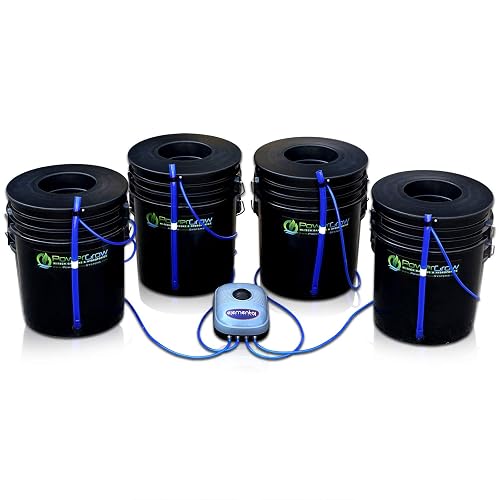
Advanced home growers typically outgrow countertop systems and transition to dedicated hydroponic systems (DWC buckets, NFT channels, flood-and-drain tables) with separate grow lights. The AeroGarden Farm 24 XL bridges the gap for those who want maximum countertop production without transitioning to a dedicated growing space.
Are there budget countertop hydroponic systems worth considering?
Yes. iDOO and QYO systems at $70–100 provide genuine growing capability at a significantly lower price than AeroGarden. The main limitations are light quality and software support, not fundamental functionality.
For the absolute most budget-conscious approach, a single-bucket DWC system with a net cup lid ($15), an air pump and stone ($10), and a small LED panel (~$55) can grow 1–4 plants hydroponically for $80–90 total, often outperforming a same-priced countertop unit in yield if properly managed. The trade-off is that it requires more knowledge to set up and manage.
Ongoing cost matters more than upfront cost for countertop systems. AeroGarden's proprietary nutrient bottles ($10–15 for a 3-month supply per 6-pod system) and pod kits ($20–30 per cycle) add up. Switching to standard hydroponic nutrients and blank pods with seeds bought in bulk can reduce ongoing costs by 60–70% once you are comfortable with basic hydroponic management.