Quick Answer
Hydroponic plants rely entirely on nutrients dissolved in water — there is no soil biology to buffer deficiencies. Understanding N-P-K ratios, electrical conductivity (EC), and pH is essential because these three variables directly control how much of each nutrient your plants can absorb at any given moment. --- What do N-P-K, calcium, and magnesium actually do for plants? The three…

Hydroponic plants rely entirely on nutrients dissolved in water — there is no soil biology to buffer deficiencies. Understanding N-P-K ratios, electrical conductivity (EC), and pH is essential because these three variables directly control how much of each nutrient your plants can absorb at any given moment.
What do N-P-K, calcium, and magnesium actually do for plants?
The three macronutrients — Nitrogen (N), Phosphorus (P), and Potassium (K) — are the primary building blocks of plant growth, and their relative proportions determine whether a plant prioritises leaf growth, root development, or fruit production. Understanding their roles helps you choose the right nutrient formula at each growth stage.
Nitrogen drives vegetative growth. It is a core component of chlorophyll (the molecule responsible for photosynthesis) and amino acids (the building blocks of proteins). Plants with adequate nitrogen develop deep green leaves and vigorous upright growth. Nitrogen deficiency shows first as yellowing of older, lower leaves, progressing upward as the plant scavenges nitrogen from mature tissue to fuel new growth. In the vegetative stage, hydroponic nutrient formulas carry a higher N ratio — often represented as something like 3-1-2 (N-P-K).
Phosphorus supports root development, energy transfer, and flowering. ATP (adenosine triphosphate), the molecule plants use to transfer energy, is phosphorus-based. In the flowering and fruiting stage, nutrient formulas shift to a lower N and higher P-K ratio — often 1-3-2 or similar — to redirect the plant's energy from leaf production to reproductive growth. Phosphorus deficiency causes dark green or purple-tinged leaves and stunted root systems.
Potassium governs water regulation, enzyme activation, and fruit quality. It controls the opening and closing of stomata (the leaf pores through which gas exchange and transpiration occur) and is critical for the movement of sugars from leaves to fruit. High-potassium feeding in the final two weeks before harvest is a common technique to intensify fruit flavour and extend shelf life.
Secondary macronutrients — calcium and magnesium — are often overlooked by beginners but are just as critical. Calcium maintains cell wall integrity; deficiency causes blossom end rot in tomatoes and tip burn in lettuce. Magnesium is central to the chlorophyll molecule; deficiency causes interveinal chlorosis (yellow patches between green leaf veins) on mature leaves. Many hydroponic nutrient solutions include calcium and magnesium, but growers using soft water or RO (reverse osmosis) water often need to supplement with a dedicated Cal-Mag product.
What is EC and how do you use it to manage nutrient concentration?
Electrical conductivity (EC) measures the total dissolved salt concentration in your nutrient solution. Pure water conducts almost no electricity; as you dissolve nutrient salts in it, conductivity rises proportionally. A calibrated EC meter (also called a TDS meter) gives you a number in millisiemens per centimetre (mS/cm) or parts per million (PPM) that represents total dissolved solids — essentially, how strong your nutrient solution is.
Different growth stages and crop types require different EC ranges:
| Crop type | Seedling stage | Vegetative stage | Flowering / fruiting |
|---|---|---|---|
| Leafy greens | 0.8–1.2 mS/cm | 1.2–1.6 mS/cm | 1.6–2.0 mS/cm |
| Herbs | 1.0–1.4 mS/cm | 1.4–1.8 mS/cm | 1.6–2.2 mS/cm |
| Tomatoes | 0.8–1.2 mS/cm | 1.8–2.4 mS/cm | 2.2–3.0 mS/cm |
| Strawberries | 1.0–1.4 mS/cm | 1.6–2.0 mS/cm | 1.8–2.4 mS/cm |
EC that is too low means plants receive insufficient nutrients and grow slowly. EC that is too high — above 3.5 mS/cm for most crops — creates osmotic stress: the solution is so concentrated that water actually moves out of root cells rather than in, effectively drought-stressing the plant despite abundant water. This is called nutrient burn and shows as browning leaf tips and edges.
Measure EC every 2–3 days and record results. A rising EC between checks means the plant is consuming more water than nutrients — top up with plain pH-adjusted water to dilute. A falling EC means the plant is consuming more nutrients than water — top up with nutrient solution at half your normal mixing strength. When EC and volume have drifted significantly (more than 0.5 mS/cm from target), do a full reservoir change.
How does pH affect nutrient availability and what range should you target?
pH is the single most important variable in hydroponic growing, yet many beginners overlook it once they have mixed their nutrient solution. pH measures hydrogen ion concentration on a 1–14 logarithmic scale. Hydroponic systems operate in the mildly acidic range of 5.5–6.5 for most crops. Within this window, all essential macro and micronutrients remain soluble and available for root uptake. Outside this window, specific nutrients precipitate out of solution or become chemically bound in forms roots cannot absorb.
This phenomenon — called nutrient lockout — is the cause of most apparent deficiency symptoms in otherwise well-fed hydroponic plants. A grower might dose their reservoir with abundant iron, but if pH is 6.8 or higher, iron precipitates as iron hydroxide and becomes unavailable. The plant shows iron deficiency (interveinal chlorosis on young leaves) despite iron being present in the water. Adjusting pH to 5.8 resolves the deficiency within 24–48 hours without adding more iron.
The chart below shows approximate nutrient availability at different pH levels:
| pH | Main nutrients affected |
|---|---|
| Below 5.5 | Calcium, magnesium, phosphorus less available |
| 5.5–6.2 | Optimal range — all nutrients available |
| 6.2–6.5 | Acceptable range for most crops |
| Above 6.5 | Iron, manganese, zinc, boron progressively lock out |
| Above 7.0 | Severe micronutrient lockout; phosphorus and iron unavailable |
Check pH daily, especially in the first two weeks of a crop cycle when uptake is high and pH fluctuates rapidly. Use a quality digital pH pen calibrated weekly with fresh buffer solution. Never rely on colour-change test kits for hydroponic growing — they lack the precision needed to distinguish between 5.8 and 6.2.
How do you mix hydroponic nutrients correctly?
Always add nutrients to water, not water to nutrients. Start with your base water in the reservoir, add nutrients according to the manufacturer's schedule, stir thoroughly, then measure and adjust pH. Adding pH-adjusting agents before nutrients are fully dissolved gives an inaccurate pH reading.
Use the manufacturer's feeding schedule as a starting point, but treat it as a maximum guide rather than a fixed prescription. Commercial nutrient schedules are designed for optimal growing conditions — a perfectly calibrated indoor setup with HID lighting and controlled temperature. Home growers typically achieve better results at 70–80% of the recommended dosage, adjusting upward only if EC measurements and plant appearance confirm the plants are consuming nutrients efficiently.
Never mix nutrient Part A and Part B concentrates together before adding to water. Parts A and B are kept separate in the bottle because certain nutrients (typically calcium in Part A and phosphorus or sulfur in Part B) would react and precipitate if combined undiluted. Always add each part separately to the reservoir water, stirring between additions.
Water quality varies significantly by location and matters more than most beginners realise. Hard tap water with high calcium and magnesium (EC above 0.4 mS/cm from the tap) requires a modified nutrient formula that accounts for the existing mineral content. Many experienced growers use RO or softened water to start from a blank slate, adding all minerals themselves for complete control.
Frequently Asked Questions
What is the difference between single-part, two-part, and three-part nutrient systems?
Can I use regular garden fertiliser in a hydroponic system?
Why does my pH keep rising even after I adjust it?
Some links in this article are affiliate links. If you purchase through them, we may earn a small commission — at no extra cost to you.
 Apera Instruments PC60 pH/EC/TDS/Temp Meter
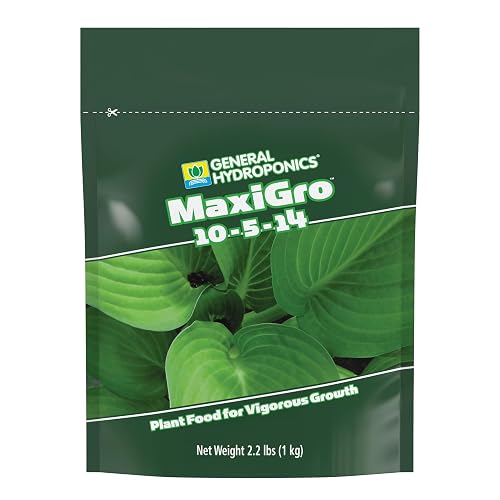 General Hydroponics pH Control Kit (pH Up, pH Down, Test Indicator)
 Bluelab pH 4.0 and 7.0 Calibration Solution Kit (500 ml each)
 General Hydroponics Flora Series (FloraGro, FloraBloom, FloraMicro)Apera Instruments PC60 pH/EC/TDS/Temp MeterGeneral Hydroponics pH Control Kit (pH Up, pH Down, Test Indicator)General Hydroponics pH Control Kit (pH Up, pH Down, Test Indicator)Bluelab pH 4.0 and 7.0 Calibration Solution Kit (500 ml each)General Hydroponics Flora Series 3-Part Nutrient System (1 qt each)
