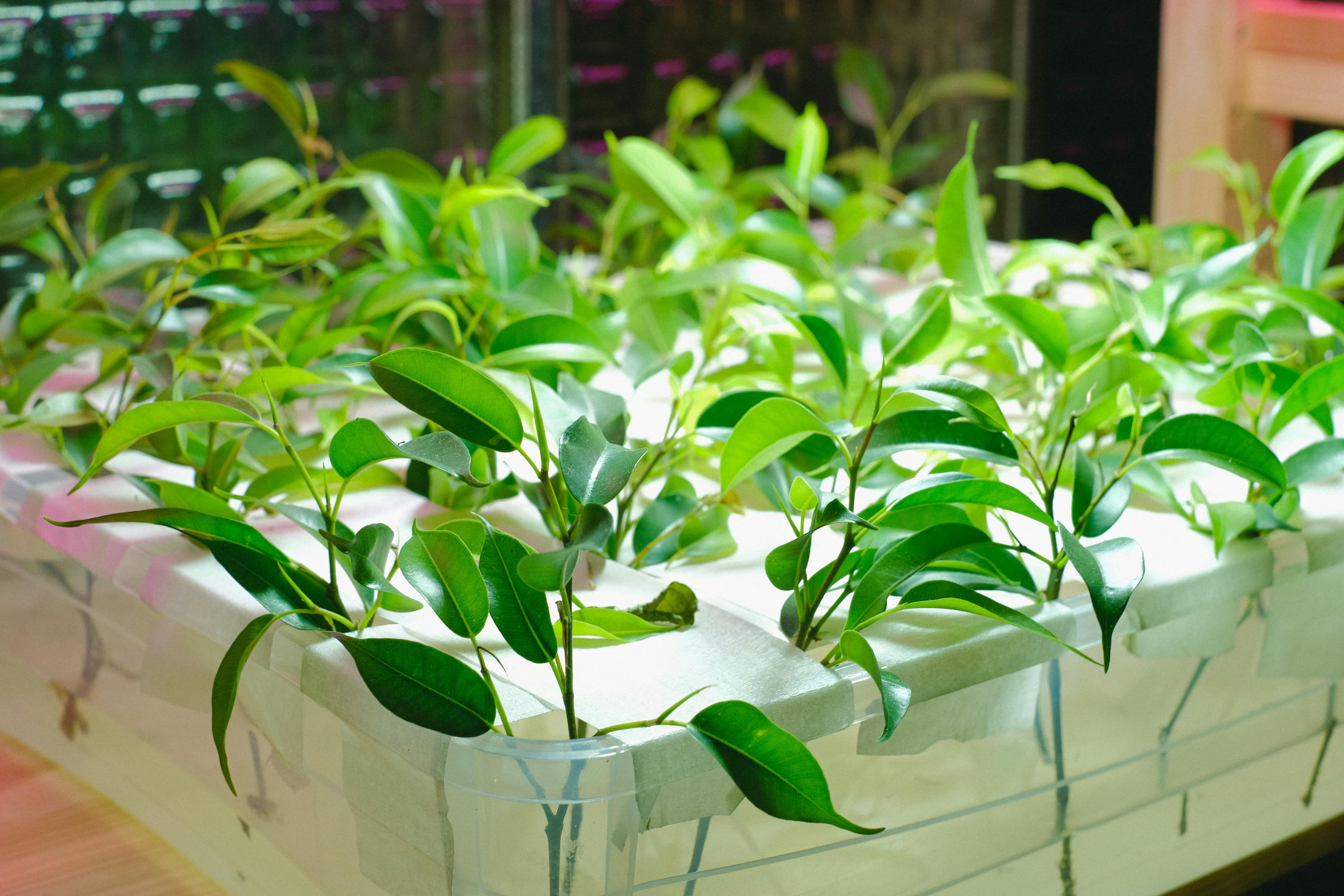
Hydroponic lettuce grows from seed to harvest in 25–35 days — roughly twice the speed of soil growing. Loose-leaf varieties in a simple Kratky or NFT system under a basic LED grow light are the ideal first hydroponic project, producing fresh salad greens with minimal equipment and daily effort.
Why is lettuce the perfect first hydroponic crop?
Lettuce has earned its status as the beginner's hydroponic crop through a combination of forgiving growing requirements and rapid, visible results. Unlike fruiting crops that require weeks of vegetative growth before producing anything harvestable, lettuce delivers a tangible, edible reward within a month — a timeline short enough to maintain motivation whilst you learn the fundamentals of hydroponic management.
The plant's nutritional requirements are modest. Lettuce thrives at EC levels of 0.8–1.6 mS/cm — well within the comfortable range for most commercial nutrient formulas mixed at half to two-thirds strength. It tolerates pH from 5.5 to 7.0 without significant problems (the sweet spot is 6.0–6.5), giving beginners a wide margin for error before deficiency symptoms appear. A lettuce plant that experiences minor pH drift or a day without ideal nutrient concentration recovers quickly; the same lapse would damage a sensitive fruiting crop irreversibly.
Lettuce also responds well to the widest range of hydroponic systems. A basic Kratky jar (a single container of nutrient solution with no pump or electricity required) grows excellent lettuce. NFT channels, DWC buckets, ebb and flow trays, and drip systems all suit lettuce equally well. This flexibility means a beginner can learn the fundamentals on the simplest possible system, then scale up to more sophisticated setups as confidence grows.
The variety range available in lettuce is impressive. Butter lettuce (Butterhead, Bibb), loose-leaf types (Red Oak Leaf, Green Batavia, Lollo Rosso), romaine/cos varieties, and baby leaf mixes all grow hydroponically with slightly different cycle lengths and flavour profiles. Mixing varieties in the same system adds visual interest and culinary variety. Red and purple varieties like Red Oakleaf or Merlot require more light than green types to develop full colouration.
How do you germinate lettuce seeds for hydroponics?
Lettuce seeds are among the smallest and most delicate commonly grown, and germination technique matters more than for larger seeds like beans or peas. Lettuce requires light to germinate — unlike many seeds that germinate in darkness, lettuce seeds contain a photoreceptor that must be activated by light before the seed will sprout. Do not bury lettuce seeds more than 3–5 mm deep, and never cover them with an opaque material.
The easiest germination method for hydroponics is rockwool starter cubes. Pre-soak cubes in pH 5.5 water for 15–30 minutes, then squeeze lightly to remove excess water (do not wring out completely). Place one or two seeds per cube in the central depression. Keep cubes in a tray under fluorescent or LED lighting at 18–22 °C. Mist daily with pH 5.5 water. Seeds typically sprout within 3–7 days.
Rapid Rooter plugs (made from composted organic material) are an alternative that many growers prefer for their faster root emergence and better moisture balance. Use the same process as rockwool — pre-soak, sow one seed per plug, keep under light at 18–22 °C.
Once seedlings develop their first true leaves (the second pair of leaves, which appear after the initial cotyledon leaves), they are ready to transplant. Gently place the rockwool cube or plug into a net pot and surround it with rinsed clay pebbles for support. Handle seedlings by their leaves rather than stems — stem damage at this stage can introduce disease and stunt growth.
What light and temperature conditions does hydroponic lettuce need?
Lettuce is a cool-season crop that performs best between 16–24 °C. Temperatures above 27 °C consistently cause bolting (premature flowering), which turns leaves bitter and ruins the harvest. In warm indoor environments, this is the primary limiting factor for year-round lettuce production. Bolting-resistant varieties such as Muir, Waldmann's, and Rex are specifically bred for higher temperatures and are better choices for summer growing.
Light requirements are modest compared with fruiting crops. Lettuce needs approximately 200–400 µmol/m²/s (PPFD) of photosynthetically active radiation — a modest LED grow light is entirely sufficient. A photoperiod of 16 hours light / 8 hours dark works well; continuous 24-hour lighting does not significantly improve growth and stresses some varieties. Blue-spectrum light (400–500 nm) drives compact, leafy growth; adding some red spectrum (620–700 nm) improves yield.
For windowsill growing without a grow light, lettuce needs a bright south-facing window receiving at least 4–6 hours of direct sun. Winter growing without supplemental light produces slow-growing, pale, stretched plants due to low light intensity. A £20–£40 clip-on LED grow lamp makes indoor lettuce production viable year-round regardless of window orientation.
Day length also affects bolting. As days lengthen naturally in spring and early summer, some lettuce varieties bolt even in cool temperatures. For year-round indoor growing, a consistent 16-hour light cycle from a timer-controlled grow light removes this variable completely and allows continuous production through all seasons.
How do you manage the harvest to maximise continuous production?
There are two harvesting strategies for hydroponic lettuce: whole-head harvest and cut-and-come-again. Whole-head harvest involves removing the entire plant at once when it reaches full size — typically when the central rosette is 15–25 cm across depending on variety. This produces the largest individual heads with the most uniform quality and is the approach used commercially.
Cut-and-come-again is more productive for home growers who want a continuous supply rather than periodic large batches. Using sharp, clean scissors, remove outer leaves 2–3 cm above the crown, leaving the central growing tip and inner leaves intact. The plant regrows from the centre and can be harvested multiple times before it bolts or quality declines. Each cut-and-come-again harvest takes 7–14 days to regenerate to the next harvest point.
Succession planting is the most effective strategy for maintaining a continuous supply. Rather than planting all your seedlings at once, stagger plantings by 1–2 weeks. In a six-plant NFT system, transplant two new seedlings every week while harvesting the two oldest plants. This creates a perpetual rolling production cycle with fresh lettuce available every week.
Wash harvested lettuce immediately and store in an airtight container in the refrigerator. Hydroponic lettuce grown without soil tends to be cleaner and less gritty than field-grown varieties, but a cold water rinse and spin-dry is still good practice. Freshly harvested hydroponic lettuce stored at 2–4 °C typically lasts 7–10 days — comparable to or better than supermarket lettuce.
Frequently Asked Questions
Why is my hydroponic lettuce bitter?
Can I regrow supermarket lettuce hydroponically?
What is the best hydroponic system for growing large quantities of lettuce?
Some links in this article are affiliate links. If you purchase through them, we may earn a small commission — at no extra cost to you.


