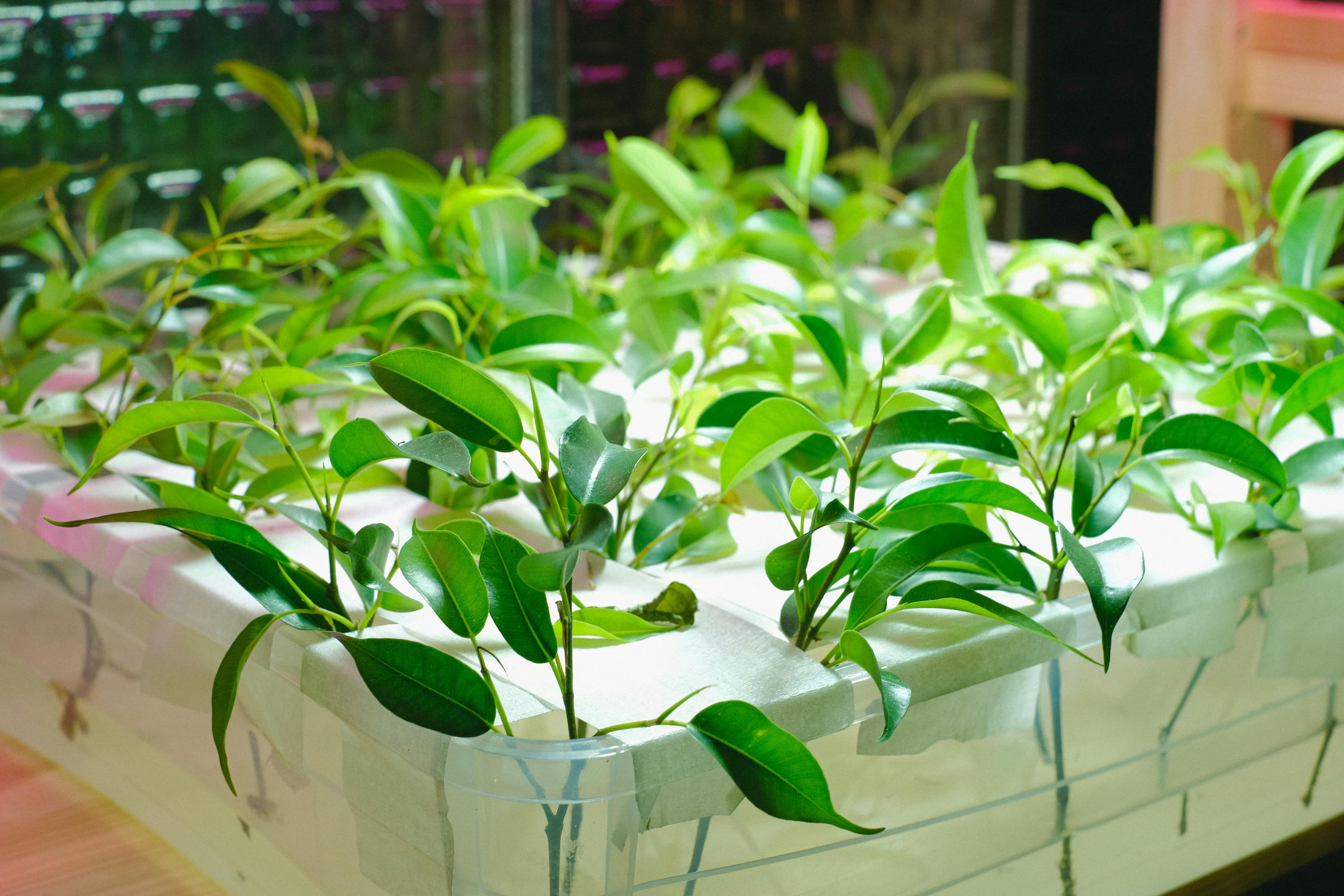
Hydroponic herbs grow 30–50% faster than soil-grown equivalents and can be harvested continuously over many weeks. Basil, mint, chives, and parsley are the easiest to start with — they thrive in a basic Kratky jar or small NFT system with modest lighting and low nutrient concentrations.
Which herbs grow best in hydroponics and which should beginners start with?
The easiest herbs for hydroponic beginners share common traits: fast growth, tolerance for a range of pH and EC values, and abundant harvest potential from relatively small plants. Basil tops the list. It grows vigorously in warm, well-lit hydroponic conditions and produces large, aromatic leaves with a flavour intensity that often surpasses soil-grown supermarket basil. A single hydroponic basil plant can yield fresh leaves for 2–3 months with regular harvesting before it flowers and the flavour declines.
Mint is prolific and virtually unstoppable in hydroponics. It grows so vigorously that it should be kept in its own dedicated reservoir rather than sharing with other herbs — its roots quickly fill available space and compete aggressively. Spearmint, peppermint, and chocolate mint all grow well. Harvest by cutting stems to 5–10 cm above the base; new growth emerges from multiple points within days. A single mint plant can supply more fresh mint than most households can use.
Chives and spring onions (scallions) are perhaps the most low-maintenance hydroponic herbs. They require minimal management beyond keeping pH and EC stable, and can be harvested with scissors repeatedly from the same plant over months. Their fibrous root systems are well-suited to NFT channels and Kratky jars. Garlic chives offer a milder flavour than common chives and regrow even more vigorously after cutting.
Parsley — both flat-leaf (Italian) and curly varieties — grows well hydroponically but starts slowly from seed, taking 3–4 weeks to establish before harvests begin. Once established it is productive and long-lived. Coriander (cilantro) is faster but more prone to bolting in warm conditions or under long photoperiods. Choose slow-bolt varieties for indoor growing and keep temperatures below 22 °C to extend the harvest window before plants flower.
What nutrient levels and pH do herbs require?
Most culinary herbs are relatively light feeders compared with fruiting crops, and excessive EC actually reduces flavour quality in many species by diluting volatile aromatic compounds. The general guideline is to grow herbs slightly lean — at lower EC than fruiting plants — for better flavour at harvest.
| Herb | Target EC (mS/cm) | Target pH | Light (hours/day) | Temperature (°C) |
|---|---|---|---|---|
| Basil | 1.0–1.6 | 5.5–6.5 | 14–16 | 22–28 |
| Mint | 1.2–1.8 | 5.5–6.5 | 12–16 | 18–24 |
| Chives | 1.2–1.8 | 6.0–6.5 | 12–16 | 15–22 |
| Parsley | 0.8–1.8 | 5.5–6.0 | 14–16 | 15–22 |
| Coriander | 1.0–1.6 | 6.0–7.0 | 12–14 | 15–20 |
| Oregano | 1.4–2.0 | 6.0–7.0 | 16–18 | 18–24 |
| Thyme | 0.8–1.6 | 5.5–7.0 | 16–18 | 18–25 |
| Rosemary | 1.0–1.6 | 5.5–6.5 | 16–18 | 18–26 |
Nitrogen is the key macronutrient for leafy herb production — it drives the vegetative growth from which you harvest. Use a nitrogen-dominant formula (or Grow component) throughout the herb's life unless you specifically want it to flower. A standard leafy green nutrient formula at 70–80% of the recommended strength suits most herbs.
Mediterranean herbs — rosemary, thyme, oregano, and sage — are somewhat different. They prefer lower water availability and slightly lower nutrient concentrations than tropical herbs like basil and mint. They also prefer slightly higher pH (6.0–7.0) and longer photoperiods to develop the essential oil content responsible for their characteristic aromas. These herbs are most rewarding in small drip systems or wick systems where moisture can be kept lower than in DWC or NFT.
How do you harvest herbs to maximise continuous production?
Harvesting technique dramatically affects how long and how productively your hydroponic herbs grow. The fundamental principle is always to encourage branching rather than vertical elongation. When you harvest the main growing tip of a herb plant, it stimulates the dormant lateral buds below the cut to activate and produce two new stems where one existed. This branching habit multiplies your harvest points and creates a bushy, productive plant rather than a leggy, single-stem one.
For basil, harvest by pinching or cutting the top two pairs of leaves from each stem, always cutting just above a leaf node (the point where leaves attach to the stem). Do this before flower buds appear — once basil begins to bolt, leaf production slows and flavour diminishes. If you spot any flower buds, remove them immediately to prolong the vegetative productive phase. Basil grown at 22–28 °C with 14–16 hours of light can be harvested every 7–10 days from a mature plant.
For mint, cut stems back to 5–10 cm above the crown once they reach 15–20 cm. This prevents the plant from becoming too large and unruly and stimulates dense regrowth. Mint can be harvested much more aggressively than basil — removing up to 50% of the plant mass at once is fine, and the regrowth is typically faster and more vigorous than from lighter pruning.
For chives, use scissors to harvest leaves 2–3 cm above the base, similar to the cut-and-come-again lettuce technique. The remaining stubs regrow quickly. Never pull chive leaves — this can disturb roots in the net pot and disrupt the plant's anchorage in the growing medium.
What are the most common problems when growing herbs hydroponically?
Bolting (premature flowering) is the primary challenge with coriander, basil, and parsley. Once a herb shifts to reproductive mode, leaf quality and quantity decline rapidly. Triggers include:
- Temperatures consistently above 25 °C for coriander; above 30 °C for basil
- Photoperiods longer than 14 hours for coriander
- Stress from overcrowding, root disease, or sudden EC swings
- Simply reaching maturity (most basil plants bolt after 8–12 weeks regardless of conditions)
Prevent bolting by keeping temperatures in the recommended range, using bolt-resistant varieties, and removing any emerging flower stalks immediately upon first appearance. For coriander specifically, sow new seeds every 4 weeks rather than trying to extend individual plants — succession planting is far more productive than fighting bolt-prone plants.
Damping off in seedlings — where young stems collapse at soil level from fungal infection — is common when germinating herb seeds. Prevent it by using sterile germination media (rockwool or Rapid Rooter), maintaining good airflow over seedlings, avoiding overwatering, and keeping germination temperatures appropriate for each species. Basil is particularly susceptible to damping off if germinated in cold or wet conditions.
Powdery mildew is a fungal disease that appears as white powdery patches on leaves, most commonly affecting basil in conditions of low airflow and high humidity. Increase air circulation with a small fan directed at the canopy, ensure humidity stays below 70%, and maintain spacing between plants. Remove affected leaves immediately. Severe infections may require treatment with diluted potassium bicarbonate or neem oil, though complete plant removal and a fresh start is sometimes more practical for small home setups.