Quick Answer
Ebb and flow systems flood a growing tray with nutrient solution on a timer, then drain it completely back into a reservoir. This cyclic wet-dry pattern feeds roots during flooding and pulls fresh oxygen into the growing medium during draining, mimicking natural rainfall rhythms. --- How does an ebb and flow system work? Ebb and flow — also called flood…
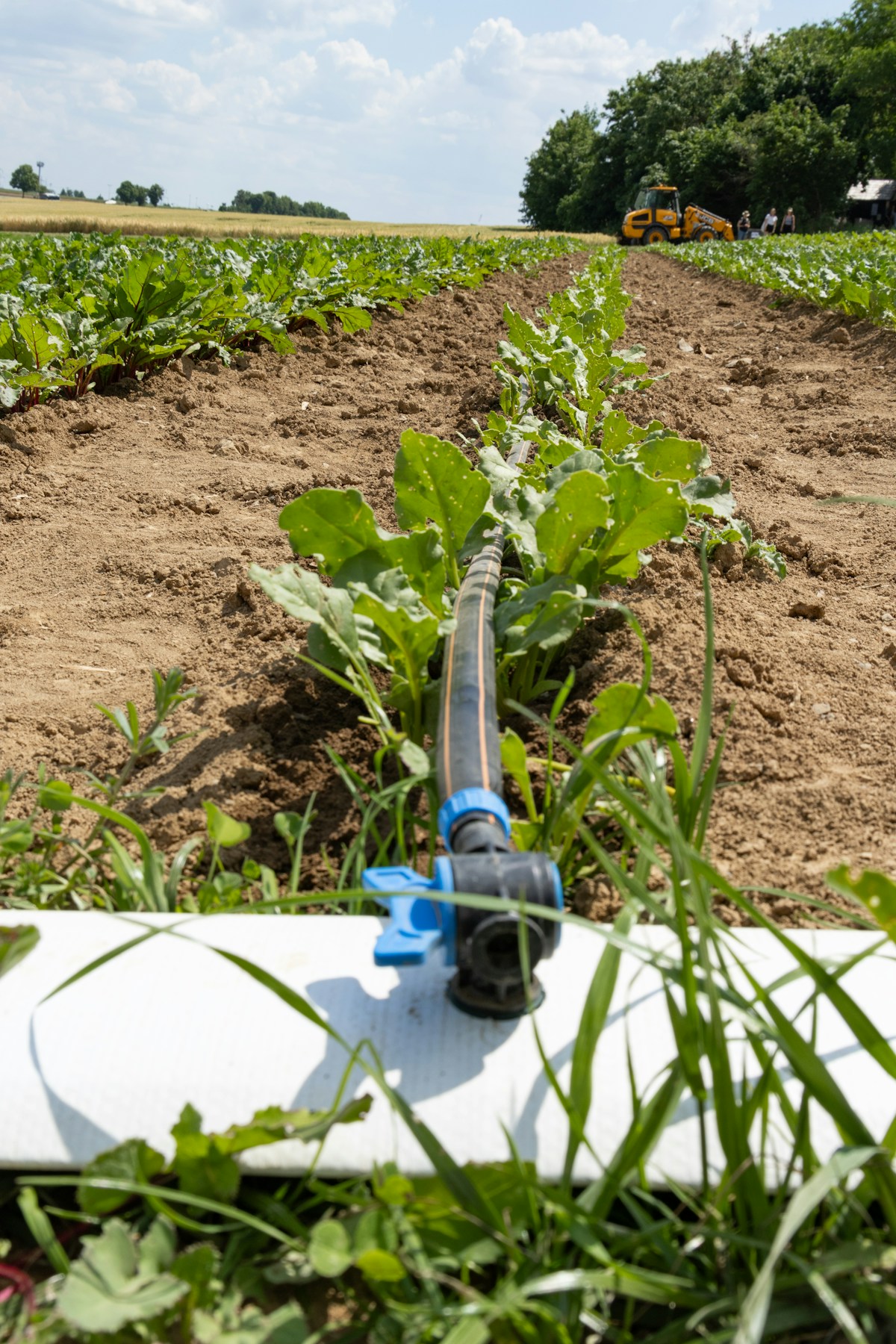
Ebb and flow systems flood a growing tray with nutrient solution on a timer, then drain it completely back into a reservoir. This cyclic wet-dry pattern feeds roots during flooding and pulls fresh oxygen into the growing medium during draining, mimicking natural rainfall rhythms.
How does an ebb and flow system work?
Ebb and flow — also called flood and drain — operates on a simple principle: controlled flooding followed by complete drainage. A timer triggers a submersible pump in a lower reservoir to push nutrient solution up into an elevated growing tray. The tray fills to a set depth (usually 5–7 cm, kept below the top of the growing medium to avoid waterlogging stems). When the timer switches the pump off, gravity pulls all the solution back down through the same pump-drain line into the reservoir.
The critical feature is what happens during the drain phase. As water recedes, it draws fresh air into the growing medium through capillary action. Roots sitting in clay pebbles, rockwool, or coco coir experience a rush of oxygen-rich air immediately after each drain. This alternating cycle of wet and dry is biomimetically close to natural rainfall and drainage, which is why ebb and flow supports such a wide variety of plant types including those that struggle in continuously wet systems like DWC.
Flood frequency depends on the growing medium, plant size, and environmental conditions. Clay pebbles, which retain almost no moisture, typically require flooding 3–5 times per day. Coco coir or rockwool holds significantly more moisture and may need only 2–3 floods per day. In hot, dry conditions with high transpiration rates, increase flood frequency; in cool, humid conditions, reduce it. Over-flooding is more dangerous than under-flooding because it eliminates the oxygen-recovery phase between cycles.
The pump, drain fittings, and overflow tube must all be sized correctly. The overflow tube — a standpipe set at the maximum desired flood depth — prevents the tray from overfilling if a timer or pump fails to shut off. This safety feature is non-negotiable in a home growing environment. The drain fitting doubles as both the fill and drain pipe, simplifying plumbing at the cost of a slightly slower fill time.
What growing media work best in ebb and flow systems?
Expanded clay pebbles (hydroton or LECA) are the most popular growing medium for ebb and flow. They provide excellent drainage during the dry phase, strong structural support for plant stems, are reusable after cleaning, and have a neutral pH impact on nutrient solution. Their main drawback is poor moisture retention, meaning more frequent flood cycles are needed — but this is a feature for oxygen-sensitive crops rather than a problem.
Rockwool is the preferred medium in commercial ebb and flow operations, particularly for propagation. Rockwool starter cubes can be placed directly onto a flood tray and filled around with clay pebbles as plants grow. Rockwool retains more moisture than clay pebbles, reducing flood frequency, but it requires pre-soaking and pH adjustment before use (rockwool is naturally alkaline and needs soaking in pH 5.5 water for several hours before introducing plants).
Coco coir blended with perlite (70:30 ratio) offers an intermediate option. It holds moisture longer than clay pebbles, has beneficial microbial properties, and supports a wide range of nutrients. However, coco coir requires coco-specific nutrient formulas that include additional calcium and magnesium to compensate for coco's tendency to bind these elements.
Avoid using soil or soil-based composts in ebb and flow trays. Soil particles wash into the reservoir during flooding, clogging pump intakes and creating anaerobic conditions at the tray bottom. If transplanting from soil, carefully wash all soil from roots before placing plants in an ebb and flow system.
How do you size and plan an ebb and flow setup?
Start with tray size. Standard ebb and flow trays are available in 60×120 cm and 90×180 cm dimensions, but DIY versions using shallow plastic storage totes work equally well. The tray must be completely flat — even a slight slope causes uneven flooding with shallow water pooling at one end and the other end remaining dry. Use a spirit level both lengthways and across the tray width before mounting it permanently.
Reservoir size should be 1.5–2× the total volume of the flood tray. If your tray holds 20 litres at full flood depth, use a 30–40 litre reservoir. The extra capacity ensures the reservoir still contains enough solution after filling the tray, and provides thermal and chemical buffering. Position the reservoir directly below the growing tray with no horizontal distance between them — the drain must flow by gravity alone.
Timer selection significantly affects system performance. Mechanical plug timers can be set in 15-minute increments, which is usually sufficient. Digital timers with 1-minute precision are better if you want to fine-tune cycle length. Multiple-outlet timers allow you to run different zones on different schedules. For most home setups, a simple 15-minute flood duration followed by 3–6 hours of dry time between floods works well as a starting point.
Headspace between the tray and your grow light matters more in ebb and flow than in other systems because plants grow directly in the tray rather than hanging below a lid. Calculate your light height based on the tallest plants at full maturity plus any training headroom, not the seedling height.
What plants grow well in ebb and flow, and how do you manage larger crops?
Ebb and flow is one of the most versatile hydroponic systems for plant variety. Leafy greens, herbs, tomatoes, peppers, cucumbers, melons, and even root vegetables like radishes grow successfully in well-managed flood and drain setups. The intermittent nature of the system gives growers more control over root zone environment than continuous-flow methods.
For fruiting crops like tomatoes and peppers, plant spacing needs careful thought. In soil, spacing is driven by foliage competition; in ebb and flow, the constraint is the tray footprint and the root volume that clay pebbles can support per plant. Indeterminate tomato varieties grown in 15-litre pots of clay pebbles sitting on a flood tray perform well, combining the benefits of flood and drain nutrition with the support of individual containers.
Training and support is more important in ebb and flow than in other systems because plants grow taller and heavier without soil resistance to anchor them. Use bamboo stakes, trellis netting, or a SCROG (screen of green) frame above the tray. Tie stems regularly and remove lower leaves to improve airflow. For heavy fruiting crops, install overhead support wires before plants are too tall to manipulate safely.
Harvest timing in ebb and flow is flexible. Unlike NFT where channel blockage requires timely harvesting, ebb and flow trays can accommodate mature plants sitting alongside recently transplanted seedlings. Many growers use a rolling harvest approach — transplanting new seedlings into one section of a large tray while harvesting from another — maintaining continuous production without interruption.
Frequently Asked Questions
What happens if the timer fails and the tray stays flooded?
How do I prevent algae in an ebb and flow tray?
Can I use ebb and flow with organic nutrients?
Some links in this article are affiliate links. If you purchase through them, we may earn a small commission — at no extra cost to you.
 Active Aqua 1000 GPH Submersible Water Pump
 BN-LINK Short Period Repeat Cycle Intermittent Timer
 General Hydroponics Flora Series 3-Part Nutrient System (1 qt each)
 VIVOSUN DWC Hydroponics Grow System with Top Drip Kit (4-Bucket)
 VIVOSUN 317GPH Commercial Air Pump (6-outlet)
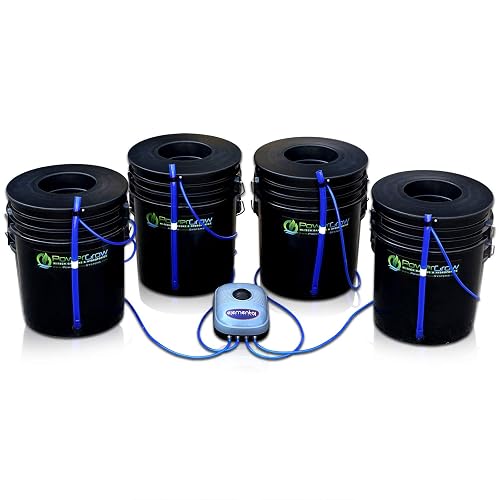 PowerGrow Systems DWC Hydroponic Bubbler Bucket Kit (4×5 Gal)
 General Hydroponics pH Control Kit (pH Up, pH Down, Test Indicator)
 Bluelab Truncheon Nutrient Meter (EC/TDS/CF)
 PGN Clay Pebbles for Hydroponics (10 Liters, pH Neutral LECA)


