Quick Answer
Wheatgrass completes its entire grow cycle in 7–9 days, requires no added nutrients, and produces the highest chlorophyll concentration of any food crop. A single 30×20cm tray yields 100–150ml of juice — enough for a therapeutic daily shot — from a cost of pennies per tray. --- What makes wheatgrass unique among hydroponic crops? Wheatgrass ( Triticum aestivum ) is…
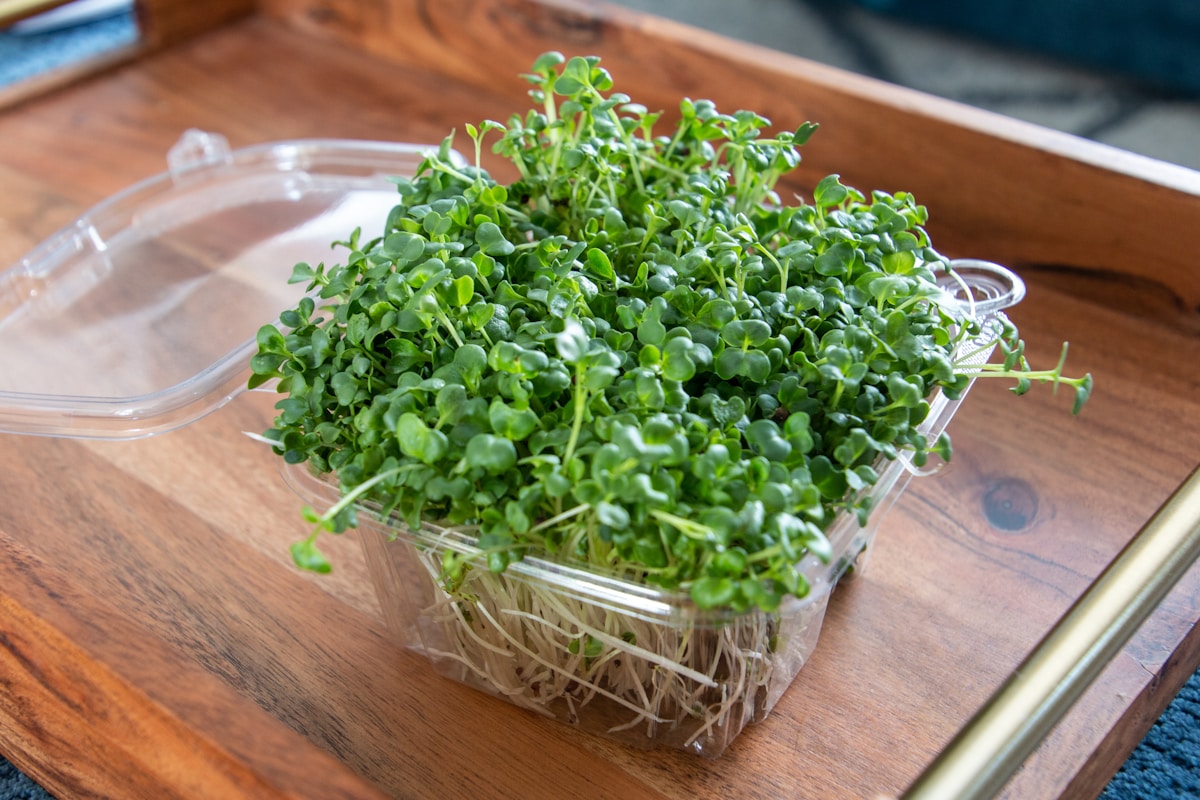
Wheatgrass completes its entire grow cycle in 7–9 days, requires no added nutrients, and produces the highest chlorophyll concentration of any food crop. A single 30×20cm tray yields 100–150ml of juice — enough for a therapeutic daily shot — from a cost of pennies per tray.
What makes wheatgrass unique among hydroponic crops?
Wheatgrass (Triticum aestivum) is grown and harvested entirely within the grass phase of wheat's lifecycle — before any jointing (the point at which the plant begins producing nodes and tillers that signal transition toward reproductive growth). At this stage, all nutrients are concentrated in the leaf tissue rather than being redirected into grain development.
Unlike every other crop covered in this series, wheatgrass requires no added nutrients from external sources. The wheat berry (seed) contains sufficient stored energy and nutrients for the plant to complete its entire growth cycle to harvest. Water is the only input required after initial soaking.
This makes wheatgrass uniquely accessible: no nutrient solution to mix or monitor, no EC management, no pH adjustment beyond ensuring the water you use is not highly alkaline. It is grown on trays rather than in hydroponic channels or DWC reservoirs, and the harvested material is consumed immediately as juice — the fresh juice degrades rapidly and should be consumed within 15 minutes of extraction for maximum nutritional benefit.
How do you sow wheatgrass?
Seed selection and pre-soak are the two steps that determine germination quality.
Seed selection: Use whole, untreated wheat berries — hard red wheat is standard, but soft white wheat and spelt also work. Ensure berries are labelled for sprouting or food use, not agricultural planting (treated seeds may be coated with fungicides). Organic sprouting wheat berries are widely available.
Sowing steps:
- Soak wheat berries in clean water for 8–12 hours (no longer — extended soaking causes fermentation). Use a 2:1 water-to-seed ratio by volume. After soaking, drain and rinse.
- Pre-germination (optional but improves uniformity): After draining, leave berries in the drained bowl covered with a cloth for 12–24 hours. Small white tails (radicles) will emerge — these are germination visible confirmation. Seeds at this stage are called "chitted."
- Prepare tray: Line a 30×20cm tray with a thin layer of growing medium (coconut coir, 1–2cm depth) or use a dry-tray method (no medium — seeds rest directly on a perforated tray over a water tray). Both methods work; coir-based growing is more forgiving for beginners.
- Spread seeds in a single dense layer — seeds can touch and slightly overlap. Do not pile multiple layers. Target approximately 150–200g of pre-soaked berries per 30×20cm tray.
- Mist lightly and cover with a second inverted tray for blackout phase.
How do you care for wheatgrass during the blackout and growing phases?
Days 1–2 (Blackout phase): Seeds need darkness and humidity to germinate uniformly. Keep covered at 18–24°C. Mist lightly once per day if the surface appears dry.
Day 2–3 (Light introduction): Germinated shoots will have pushed the cover tray upward. Remove the blackout cover — the pale yellow shoots will begin greening within hours of light exposure.
Days 3–9 (Growth phase):
| Day | Approximate Height | Action |
|---|---|---|
| 3 | 2–4cm (pale) | Remove blackout, introduce light |
| 4 | 5–7cm (greening) | Bottom water if tray feels light |
| 5 | 8–11cm | Check for mould |
| 6 | 11–14cm | Growth accelerating |
| 7 | 14–18cm | Pre-harvest check |
| 8–9 | 18–22cm | Optimal harvest window |
| 10+ | 20–25cm | Jointing begins; quality declines |
Watering: Use bottom-watering exclusively after the initial mist. Place the growing tray in a shallow catch tray with 1–2cm of water; allow to absorb over 30 minutes, then drain. Repeat every 2 days or when the tray feels lightweight. Surface moisture is the primary mould trigger in dense tray plantings.
Temperature: 18–24°C. Wheatgrass grows faster in the warmer part of this range but is more susceptible to mould above 24°C. For mould-prone growers, favour the cooler end.
Light: Wheatgrass does not need intense light — 150–200 PPFD for 12–14 hours produces excellent results. Direct sunlight from a bright window is sufficient in most climates.
How do you prevent mould in wheatgrass trays?
Dense seeding combined with high moisture makes wheatgrass relatively mould-prone compared to other crops. The interventions, in order of importance:
- Bottom-water only — never mist the shoot surface after day 2
- Airflow — a small fan running at low speed near the trays dramatically reduces mould incidence
- Spacing between trays — ensure trays are not stacked or crowded during the growing phase
- Seed quality — use fresh sprouting-grade wheat berries; old or improperly stored seeds introduce mould with the seed itself
- Temperature — keep below 24°C consistently
White fuzzy growth at the stem base is frequently confused with mould. The root hairs of wheat seedlings are white and appear as fine fuzz at the soil line — this is normal and should not be disturbed. True mould is grey-green or black, appears on the growing tips or upper leaf surface rather than the base, and has a musty odour.
When and how do you harvest wheatgrass?
Optimal harvest window: 7–9 days, when grass is 15–20cm tall and before jointing (the first node becomes visible on the stem). Jointing indicates the plant has begun reproductive development — the grass becomes fibrous, bitter, and harder to juice cleanly.
Harvest technique:
- Cut with sharp scissors or a serrated knife in a single horizontal pass, 2–3cm above the seed mass at the base of the tray.
- Do not pull — pulling dislodges seeds and growing medium from the tray.
- The seed mass remains in the tray. Some growers attempt a second cut (ratoon crop) 7–10 days later; quality is significantly lower (thinner blades, lower chlorophyll) — start a fresh tray instead for consistent quality.
Juicing yield: A 30×20cm tray at optimal harvest yields approximately 100–180ml of juice when passed through a masticating (cold press) juicer. Centrifugal juicers perform poorly with wheatgrass — the short, fine blades are not efficiently processed by high-speed spinning. A manual wheatgrass juicer (dedicated single-auger press) is the most efficient option.
Consumption: Fresh wheatgrass juice is consumed as a 30–60ml shot, not a full glass. Drink immediately; the enzymatic activity and volatile compounds that give fresh juice its distinctive character degrade within 15 minutes at room temperature.
What is wheatgrass's nutritional profile and is the health evidence solid?
Wheatgrass is frequently overhyped in wellness marketing and undervalued in mainstream nutrition. The accurate picture is more nuanced than either extreme.
| Nutrient | Per 30ml Fresh Juice | Notes |
|---|---|---|
| Chlorophyll | 70–120mg | Highest known food source by volume |
| Vitamin C | 7mg | 8% DV — meaningful at this dose |
| Vitamin E | 0.8mg | 5% DV |
| Vitamin K | 60–80 µg | 50–67% DV — significant |
| Vitamin A | 90 µg RAE | 10% DV |
| Iron | 0.5mg | 3% DV (non-haem) |
| Amino acids | Complete profile | All essential amino acids present in small quantities |
Chlorophyll: At 70–120mg per 30ml shot, wheatgrass juice provides the highest chlorophyll concentration available from any single food source. Chlorophyll's direct human health effects are modest — it is not directly absorbed in significant quantities — but it acts as an antioxidant, has demonstrated wound healing properties in topical applications, and is studied for heavy metal chelation. The claim that "chlorophyll oxygenates the blood" by mimicking haemoglobin is physiologically incorrect: haemoglobin contains iron at its centre; chlorophyll contains magnesium, and the molecular pathways are entirely different.
Compared to mature wheat: Wheatgrass contains virtually none of the gluten that makes mature wheat problematic for coeliac individuals, as gluten is a storage protein in the grain, not the leaf tissue. However, cross-contamination during growing and juicing is possible — those with severe coeliac disease should be cautious.
Frequently Asked Questions
Is wheatgrass actually nutritious or a health myth?
Can I use regular wheat from a grocery store?
Why does my wheatgrass tray smell bad?
Some links in this article are affiliate links. If you purchase through them, we may earn a small commission — at no extra cost to you.
 Barrina T5 LED Grow Light Strips (4-pack, 4ft)
 AC Infinity Humidity Dome Germination Kit (3mm Dome, Vented Height Panels)
 General Hydroponics pH Control Kit (pH Up, pH Down, Test Indicator)
 Bootstrap Farmer Premium Microgreen Starter KitBarrina T5 LED Grow Light Strips (4-pack, 4ft)
 PGN Clay Pebbles for Hydroponics (10 Liters, pH Neutral LECA)AC Infinity Humidity Dome Germination Kit (3mm Dome, Vented Height Panels)
 GRODAN A-OK Rockwool Starter Cubes (1.5-inch, Sheet of 98 Plugs)
 BN-LINK Short Period Repeat Cycle Intermittent Timer
