Quick Answer
Aquaponics integrates fish and plants into a self-sustaining ecosystem with lower ongoing nutrient costs but higher management complexity. Hydroponics offers precise control and faster crop cycling with fewer variables to manage, but depends on purchased chemical nutrients. Neither is universally better — the right choice depends on your goals, location, and investment appetite. --- How are aquaponics and hydroponics different?…

Aquaponics integrates fish and plants into a self-sustaining ecosystem with lower ongoing nutrient costs but higher management complexity. Hydroponics offers precise control and faster crop cycling with fewer variables to manage, but depends on purchased chemical nutrients. Neither is universally better — the right choice depends on your goals, location, and investment appetite.
How are aquaponics and hydroponics different?
Both systems grow plants in water without soil, but they differ fundamentally in where plant nutrients come from.
In hydroponics, you dissolve precisely formulated chemical nutrients directly into the water. You control every input: pH, electrical conductivity (EC), and nutrient concentrations are dialled in to exact specifications. Plants receive exactly what they need, when they need it. There are no fish to worry about, no bacterial cycling phase, and no animal welfare considerations.
In aquaponics, fish produce waste that beneficial bacteria convert into plant nutrients. The nutrient profile is less precise than hydroponics — it depends on fish species, feed type, stocking density, and bacterial efficiency. What you gain is a largely self-sustaining nutrient loop: once established, your fish feed your plants without purchasing liquid nutrients.
The practical consequence is that hydroponics is easier to learn and control, while aquaponics is more self-sustaining and biologically interesting but requires managing more variables simultaneously.
How do aquaponics and hydroponics compare on sustainability?
Sustainability is where aquaponics makes its strongest case, but hydroponics has made significant strides.
Water usage: Both systems use 70–90% less water than soil farming. Hydroponics is typically more water-efficient at small scale because there is no fish tank evaporation and you can recirculate nutrient solution precisely. Aquaponics conserves water well but requires top-off for evaporation from the fish tank.
Chemical inputs: Hydroponic nutrient solutions are manufactured from mined and synthesized minerals — the majority of conventional liquid nutrients are fossil-fuel derived. Aquaponics creates nutrients biologically from fish feed, which itself may be conventionally or sustainably sourced. Certified organic hydroponics is possible but difficult; aquaponics more naturally aligns with organic principles.
Waste production: Hydroponic nutrient solution must be disposed of when nutrient ratios become imbalanced — this is typically drained to soil or municipal systems every 2–4 weeks (in open systems). Aquaponics produces minimal liquid waste; solids from fish waste that settle out can be composted as fertilizer.
Energy: Both systems require pumps and, for indoor production, lighting. Aquaponics typically uses more electricity per production unit due to the fish tank aeration requirement. However, passive solar greenhouse aquaponics can be highly energy efficient.
| Factor | Aquaponics | Hydroponics |
|---|---|---|
| Water efficiency | High | Very high |
| Nutrient sustainability | High (biological) | Low–medium (chemical) |
| Chemical inputs | Minimal | Required |
| Waste output | Low (solids compostable) | Moderate (nutrient solution disposal) |
| Energy use | Medium–high | Medium |
| Organic certification | Achievable | Difficult |
How do costs compare between aquaponics and hydroponics?
Cost comparison depends heavily on scale, but several patterns hold across different system sizes.
Startup costs:
Hydroponics is generally cheaper to set up at small scale because you need fewer components — no fish tank, no aeration system, simpler filtration. A basic hydroponic NFT or DWC system can start at $50–$150 for a beginner setup. A comparable aquaponics system starts at $150–$300 due to fish tank, air pump, and additional filtration requirements.
At commercial scale, the gap narrows. Both systems require greenhouse infrastructure, lighting, automation, and monitoring systems that dominate total capital costs.
Ongoing costs:
This is where aquaponics often wins at scale. Hydroponic nutrient solutions cost $20–$60/month for a small home system and scale proportionally. Aquaponics ongoing costs are primarily fish feed ($10–$30/month for a home system) — far less than equivalent nutrient solutions.
Commercial operations report aquaponics nutrient costs 60–80% lower than comparable hydroponics operations per kg of produce.
| Cost Item | Aquaponics | Hydroponics |
|---|---|---|
| Startup (small home system) | $150–$350 | $50–$200 |
| Startup (commercial 1,000 m²) | $150,000–$500,000 | $100,000–$400,000 |
| Monthly nutrients (home) | $10–$30 (fish feed) | $20–$60 (nutrient solution) |
| Water (monthly home system) | $2–$5 | $1–$3 |
| Ongoing maintenance | Higher (fish care) | Lower |
| Crop revenue potential | Fish + plants | Plants only |
Which system is right for you?
Your choice should match your goals, experience level, and the time you can commit.
Choose hydroponics if:
- You want the simplest path to growing food at home
- You are primarily interested in maximizing plant yield
- You have no interest in fish management or animal husbandry
- You want precise, repeatable results with minimal variables
- You plan to grow commercially and need predictable crop cycles
Choose aquaponics if:
- You are drawn to the biological complexity and ecosystem management
- Sustainability and closed-loop nutrient cycles matter to you
- You want to produce both fish protein and vegetables
- You are comfortable with a 6–8 week startup investment before first harvest
- You plan a commercial operation and want to diversify revenue with fish sales
Consider starting with hydroponics if you are completely new to soilless growing. The skills and understanding of plant nutrition, pH management, and water testing you develop transfer directly to aquaponics. Many successful aquaponics growers started with hydroponics and transitioned after gaining confidence.
Frequently Asked Questions
Is aquaponics actually better for the environment than hydroponics?
Can I grow the same crops in aquaponics and hydroponics?
What is aeroponics, and how does it compare to aquaponics and hydroponics?
Some links in this article are affiliate links. If you purchase through them, we may earn a small commission — at no extra cost to you.
 Fritz Aquatics FritzZyme 7 Live Nitrifying Bacteria (Freshwater)
 API Freshwater Master Test Kit (800 Tests — pH, Ammonia, Nitrite, Nitrate)
 Inkbird ITC-308S Aquarium Temperature Controller (Dual-Outlet Thermostat)
 General Hydroponics Flora Series 3-Part Nutrient System (1 qt each)
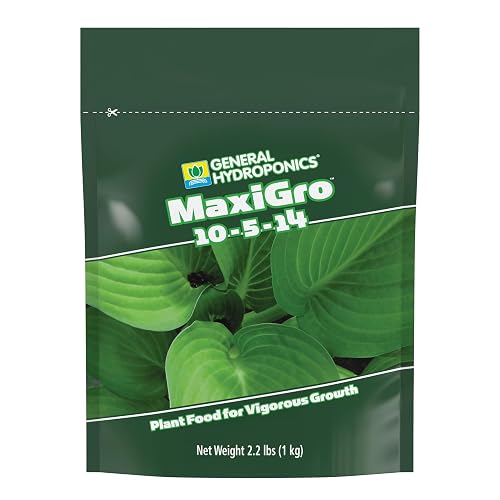 General Hydroponics pH Control Kit (pH Up, pH Down, Test Indicator)
 INKBIRD WiFi Thermometer Hygrometer IBS-TH5 (9-in-1, 2-Year Data Storage)Fritz Aquatics FritzZyme 7 Live Nitrifying Bacteria (Freshwater)
 Lettuce Grow Farmstand (12-site)Inkbird ITC-308S Aquarium Temperature Controller (Dual-Outlet Thermostat)

